

 English
 русский
 Español
Content
- 1 Introduction
- 2 Understanding the Basics of Air Coolers and Frost Formation
- 3 What Is a Water Defrosting Air Cooler?
- 4 Core Working Principle of Water Defrosting
- 5 Key Components of a Water Defrosting Air Cooler
- 6 Comparison with Traditional Defrosting Methods
- 7 Advantages of Water Defrosting Air Cooler Technology
- 8 Typical Application Scenarios
- 9 Design Considerations for System Integration
- 10 Role of Water Defrosting Air Cooler Manufacturers
- 11 Maintenance and Operational Best Practices
- 12 Conclusion
- 13 FAQ
- 13.1 1. How does a water defrosting air cooler differ from electric defrost systems?
- 13.2 2. Is water defrosting suitable for very low-temperature environments?
- 13.3 3. Does water defrosting increase maintenance requirements?
- 13.4 4. What industries benefit most from water defrosting air coolers?
- 13.5 5. Are water defrosting systems environmentally friendly?
Introduction
As energy efficiency, environmental responsibility, and operational reliability become central concerns across cooling-intensive industries, new approaches to thermal management are gaining attention. One such approach is the water defrosting air cooler, a system designed to improve heat exchange performance while addressing one of the most persistent challenges in low-temperature cooling: frost accumulation. Unlike conventional defrosting methods that rely heavily on electric heaters or hot gas cycles, water-based defrosting introduces a controlled, thermodynamically efficient alternative that aligns with modern sustainability goals.
Understanding the Basics of Air Coolers and Frost Formation
The Role of Air Coolers in Cooling Systems
Air coolers are heat exchange devices commonly used in refrigeration, cold storage, food processing, logistics, and industrial cooling environments. Their primary function is to transfer heat from a controlled space to a refrigerant, maintaining a desired temperature range. In low-temperature or high-humidity conditions, moisture in the air tends to condense and freeze on the surface of the heat exchanger fins and tubes.
Why Frost Is a Problem
Frost buildup is not merely a cosmetic issue. Over time, it can:
- Reduce heat transfer efficiency
- Increase airflow resistance
- Raise energy consumption
- Cause uneven temperature distribution
- Shorten equipment lifespan
Traditional defrosting methods, while effective to a degree, often introduce secondary problems such as temperature fluctuations, high energy usage, or system complexity. This is where water defrosting air cooler technology offers a differentiated solution.
What Is a Water Defrosting Air Cooler?
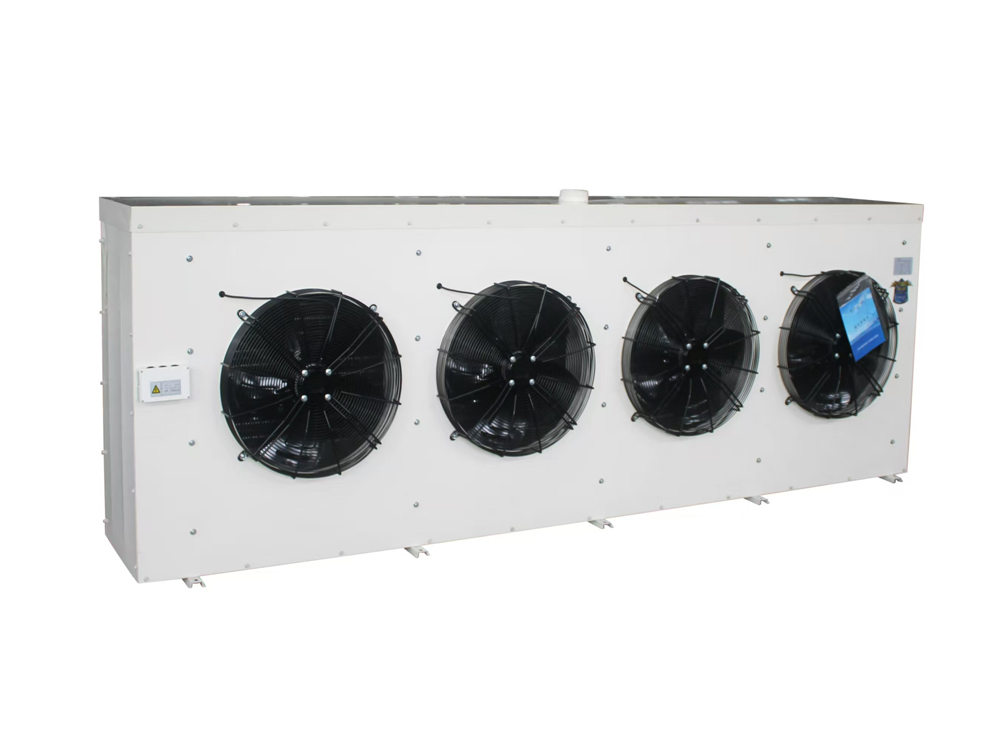
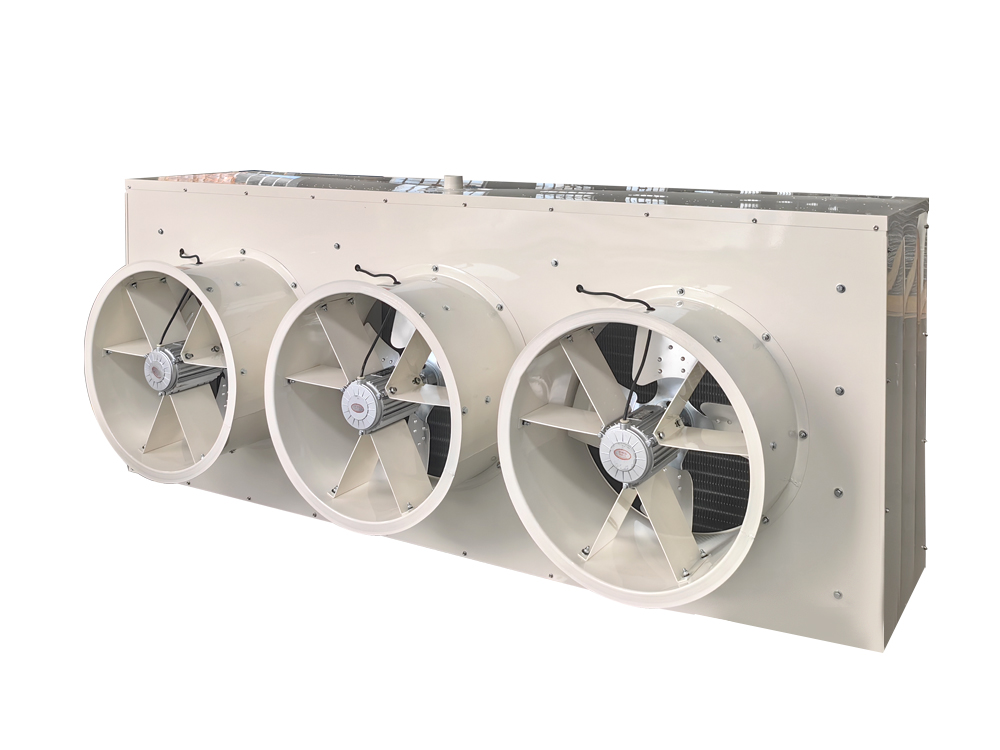
A water defrosting air cooler is a type of air cooler that uses controlled water circulation to remove frost from the heat exchange surface. Instead of applying electric heat or redirecting hot refrigerant gas, the system introduces water—typically at a carefully regulated temperature—to melt accumulated frost in a uniform and energy-efficient manner.
This approach leverages the high heat capacity of water, allowing frost to be removed quickly without exposing the system to excessive thermal stress. As a result, the air cooler can return to normal operation with minimal interruption.
Core Working Principle of Water Defrosting
Step-by-Step Defrosting Logic
The operation of a water defrosting air cooler follows a structured sequence:
Frost Detection
Sensors monitor temperature differentials, airflow resistance, or operating time to determine when frost accumulation reaches a predefined threshold.
System Isolation
The cooling cycle is temporarily paused or adjusted to prevent refrigerant flow during defrosting.
Water Introduction
Water is sprayed or circulated over the heat exchange surface. The water temperature is optimized to melt frost efficiently without causing thermal shock.
Drainage and Drying
Meltwater is collected and drained away. Fans may operate briefly to remove residual moisture.
Return to Cooling Mode
The system resumes normal cooling operation with restored heat exchange efficiency.
Thermodynamic Advantage
Water’s ability to absorb and transfer heat efficiently allows defrosting to occur faster and more evenly than many traditional methods. This reduces defrost cycle duration and limits temperature fluctuations within the cooled space.
Key Components of a Water Defrosting Air Cooler
A well-designed water defrosting air cooler integrates several critical components, each contributing to system reliability and performance.
| Component | Function |
|---|---|
| Heat exchanger coil | Facilitates heat transfer between air and refrigerant |
| Water distribution system | Delivers water evenly across the coil surface |
| Defrost control unit | Manages timing, duration, and sequence of defrost cycles |
| Sensors and monitors | Detect frost buildup and operating conditions |
| Drainage system | Removes meltwater efficiently to prevent refreezing |
| Fans and airflow controls | Restore airflow and assist drying after defrost |
The coordination of these components distinguishes water defrosting systems from more conventional designs.
Comparison with Traditional Defrosting Methods
To better understand the value of water defrosting, it is useful to compare it with commonly used alternatives.
| Defrosting Method | Energy Efficiency | Temperature Stability | System Complexity | Operational Impact |
|---|---|---|---|---|
| Electric defrost | Moderate to low | Moderate fluctuations | Simple | High energy load |
| Hot gas defrost | Moderate | Noticeable fluctuations | Complex | System stress |
| Natural defrost | Low | Unstable | Simple | Limited effectiveness |
| Water defrosting air cooler | High | Stable | Moderate | Balanced and efficient |
This comparison highlights why many system designers and end users are evaluating water-based solutions as a long-term strategy.
Advantages of Water Defrosting Air Cooler Technology
Improved Energy Efficiency
By avoiding high-power heating elements or complex refrigerant redirection, water defrosting reduces energy consumption during defrost cycles. Over time, this contributes to lower operating costs and improved system efficiency.
Enhanced Temperature Control
Water defrosting minimizes abrupt temperature changes, helping maintain a stable environment. This is especially important in applications where temperature consistency directly affects product quality or process reliability.
Reduced Mechanical Stress
Gradual and uniform frost removal places less stress on coils, joints, and supporting structures. This can extend the service life of the air cooler and reduce maintenance frequency.
Environmental Compatibility
Water-based defrosting aligns with sustainability objectives by reducing reliance on energy-intensive methods. When integrated with efficient water management systems, overall environmental impact can be minimized.
Typical Application Scenarios
Water defrosting air cooler systems are suitable for a wide range of environments, particularly those characterized by low temperatures and high humidity.
Cold Storage and Warehousing
In cold storage facilities, frequent door openings introduce moisture, accelerating frost formation. Water defrosting provides a reliable way to maintain efficiency without disrupting stored goods.
Food Processing and Handling
Stable temperature control is essential in food-related environments. Water defrosting supports hygienic operation while minimizing thermal shock.
Industrial Cooling Processes
Manufacturing processes that depend on precise temperature control benefit from reduced defrost-related downtime and energy savings.
Logistics and Distribution Centers
Large-scale facilities with continuous operation cycles require defrosting methods that are both efficient and predictable.
Design Considerations for System Integration
When incorporating a water defrosting air cooler into a cooling system, several design factors must be evaluated.
Water Quality and Management
Water used for defrosting should be treated or filtered to prevent scaling, corrosion, or microbial growth. Proper drainage design is equally important to avoid ice formation after defrosting.
Control Strategy
Advanced control systems allow defrost cycles to be initiated based on actual operating conditions rather than fixed schedules. This adaptive approach improves efficiency and responsiveness.
Material Selection
Components exposed to water and temperature variations must be constructed from materials that resist corrosion and thermal fatigue.
Role of Water Defrosting Air Cooler Manufacturers
Water defrosting air cooler manufacturers play a critical role in advancing this technology. Their responsibilities extend beyond basic equipment production and include:
- Engineering optimized water distribution systems
- Developing intelligent defrost control algorithms
- Ensuring compatibility with various refrigerants
- Enhancing durability through material innovation
As demand grows, manufacturers are increasingly focused on modular designs and customization to meet specific application requirements.
Maintenance and Operational Best Practices
Routine Inspection
Regular inspection of water lines, nozzles, and drainage paths ensures consistent defrosting performance.
Sensor Calibration
Accurate frost detection depends on properly calibrated sensors. Periodic verification helps maintain system responsiveness.
Seasonal Adjustments
Operating parameters may need adjustment based on ambient conditions and seasonal humidity variations.
Conclusion
The water defrosting air cooler represents a thoughtful response to long-standing challenges in low-temperature cooling environments. By leveraging the thermal properties of water, this technology offers a balanced combination of efficiency, stability, and reliability. Its growing adoption reflects a broader industry shift toward sustainable and performance-driven solutions.
FAQ
1. How does a water defrosting air cooler differ from electric defrost systems?
A water defrosting air cooler uses controlled water circulation to melt frost, while electric defrost systems rely on heating elements. Water-based defrosting generally offers better energy efficiency and more stable temperature control.
2. Is water defrosting suitable for very low-temperature environments?
Yes, when properly designed and controlled, water defrosting systems can operate effectively in low-temperature environments without causing refreezing or thermal shock.
3. Does water defrosting increase maintenance requirements?
Not necessarily. While water management components require attention, reduced mechanical and thermal stress can lower overall maintenance needs compared to some traditional defrost methods.
4. What industries benefit most from water defrosting air coolers?
Industries such as cold storage, food processing, industrial manufacturing, and logistics benefit significantly due to their need for stable temperatures and continuous operation.
5. Are water defrosting systems environmentally friendly?
When designed with efficient water use and proper drainage, water defrosting air cooler systems can reduce energy consumption and support environmentally responsible cooling strategies.


 Contact Number:+86-18858565929
