

 English
 русский
 Español
Content
- 1 Introduction
- 2 What Is an Electric Defrosting Air Cooler?
- 3 Operating Principle and Defrosting Mechanism
- 4 Key Features of Electric Defrosting Air Coolers
- 5 Performance Benefits
- 6 Comparison of Defrosting Methods
- 7 Typical Applications
- 8 Product Configuration Overview
- 9 Installation and Maintenance Considerations
- 10 FAQ
Introduction
As cold-chain infrastructure, industrial refrigeration, and temperature-controlled logistics continue to expand, the demand for stable, efficient, and low-maintenance cooling equipment is steadily increasing. Among the key components used in cold rooms, refrigerated warehouses, food processing facilities, and industrial cooling environments, the electric defrosting air cooler has emerged as a highly practical and widely adopted solution.
An electric defrosting air cooler integrates air cooling and electric defrost technology into a single, compact system. It is designed to maintain consistent temperature control while effectively managing frost accumulation on heat exchange surfaces. This combination directly addresses one of the most common challenges in refrigeration systems: performance degradation caused by ice buildup.
What Is an Electric Defrosting Air Cooler?
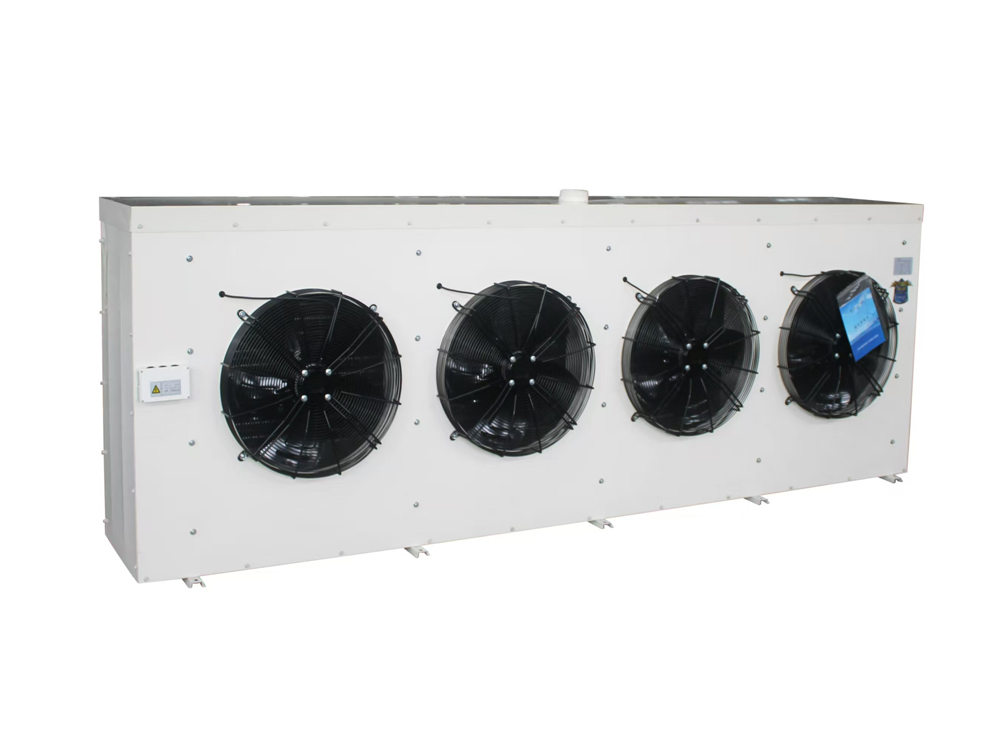
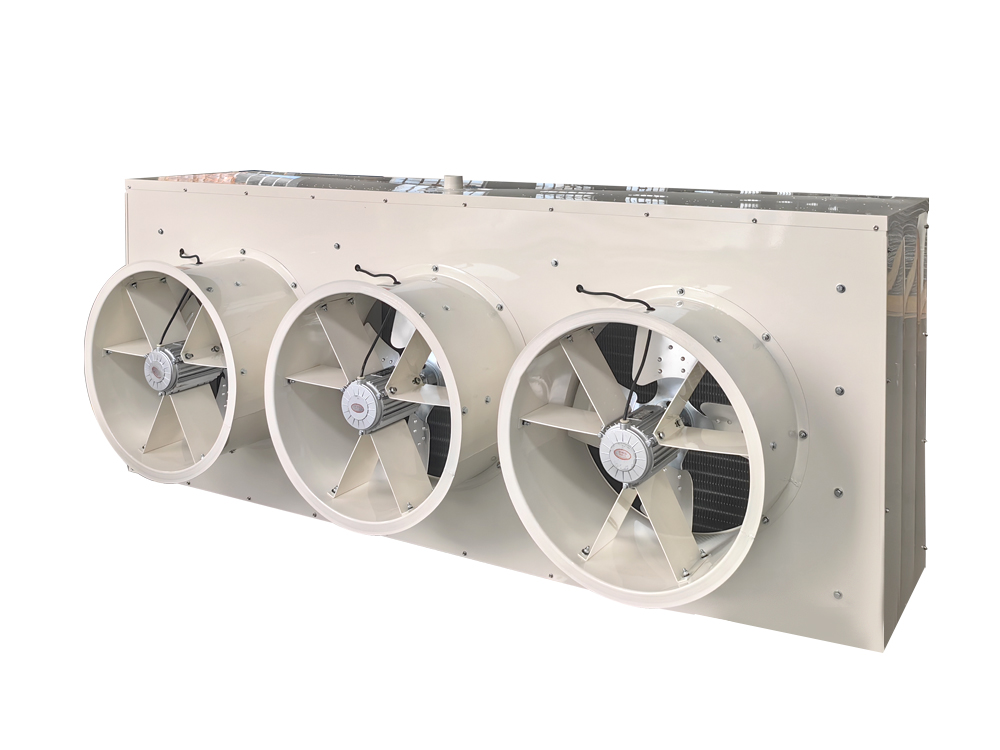
An electric defrosting air cooler is a type of refrigeration air cooler equipped with electric heating elements that periodically remove frost from the evaporator surface. Unlike natural or hot-gas defrost methods, electric defrosting relies on controlled electric heaters to melt accumulated ice quickly and uniformly.
The system typically consists of:
- A finned evaporator coil for heat exchange
- Axial or centrifugal fans for air circulation
- Electric defrost heaters installed within or around the coil
- Drain pans and water outlets to manage melted frost
- Sensors and control components to automate defrost cycles
This configuration allows the air cooler to maintain optimal heat transfer efficiency even in low-temperature or high-humidity environments, where frost formation is unavoidable.
Operating Principle and Defrosting Mechanism
Cooling Cycle
During normal operation, refrigerant flows through the evaporator coil, absorbing heat from the surrounding air. Fans draw warm air across the fins, cooling the space evenly and efficiently. This process is common to most industrial air coolers used in cold storage and refrigerated rooms.
Frost Formation
In environments where moisture is present, water vapor in the air condenses and freezes on the cold coil surface. Over time, frost accumulation restricts airflow and reduces heat exchange efficiency, increasing energy consumption and stressing system components.
Electric Defrost Cycle
The electric defrost system activates at preset intervals or based on sensor feedback. Electric heaters raise the coil temperature above freezing, melting accumulated ice. The melted water drains away through designed channels, and the system then returns to cooling mode.
This controlled defrost process ensures:
- Minimal temperature fluctuation in the cooled space
- Short defrost duration
- Reduced mechanical stress on the evaporator
Key Features of Electric Defrosting Air Coolers
Integrated Electric Defrost System
The defining feature of an electric defrosting air cooler is its built-in electric defrost system. This allows precise control over defrost timing and duration, making it suitable for environments with strict temperature stability requirements.
Compact and Modular Design
These air coolers are typically designed with compact footprints and modular structures, making them easy to install in cold rooms with limited space. Modular designs also simplify maintenance and component replacement.
Uniform Air Distribution
Optimized fan and coil layouts ensure even air circulation, reducing temperature stratification within the refrigerated space. This is especially important in food storage and processing environments.
Automated Control Compatibility
Electric defrosting air coolers are compatible with modern refrigeration control systems. Sensors and controllers can adjust defrost frequency based on operating conditions, improving efficiency and reducing unnecessary energy use.
Performance Benefits
Stable Cooling Efficiency
By preventing excessive frost buildup, electric defrosting air coolers maintain consistent heat transfer efficiency. This stability helps refrigeration systems operate closer to their design parameters over long periods.
Reduced Energy Consumption
Although electric defrosting uses power during defrost cycles, the overall energy balance is often favorable. Clean coils reduce fan resistance and compressor workload, leading to lower total energy consumption.
Improved Equipment Longevity
Frost-related airflow restriction and uneven cooling can place additional stress on fans, motors, and compressors. Regular electric defrosting minimizes these risks, extending equipment service life.
Hygienic Operation
Effective defrosting reduces the risk of ice-related contamination and water pooling. This is particularly important in applications such as food cold rooms, pharmaceutical storage, and clean industrial environments.
Comparison of Defrosting Methods
The table below highlights how electric defrosting compares with other commonly used defrosting approaches in industrial air coolers.
| Defrosting Method | Control Precision | Defrost Speed | System Complexity | Application Suitability |
|---|---|---|---|---|
| Electric defrost | High | Fast | Moderate | Low and medium temperature cold rooms |
| Natural defrost | Low | Slow | Low | Mild temperature environments |
| Hot gas defrost | High | Fast | High | Large industrial refrigeration systems |
This comparison illustrates why electric defrosting air cooler solutions are often preferred for small to medium cold storage and applications requiring precise temperature management.
Typical Applications
Cold Storage and Warehousing
In refrigerated warehouses and cold storage facilities, maintaining stable temperature and humidity levels is essential. Electric defrosting air coolers are widely used to ensure reliable cooling while preventing frost-related efficiency loss.
Food Processing and Packaging
Food processing environments demand consistent airflow, hygienic conditions, and minimal temperature fluctuation. Electric defrosting systems help meet these requirements by ensuring clean evaporator surfaces and predictable operation.
Pharmaceutical and Medical Storage
Sensitive products such as vaccines, chemicals, and medical supplies require strict temperature control. The precise defrost management offered by electric defrosting air coolers supports compliance with storage standards.
Industrial Refrigeration Systems
In industrial applications, including process cooling and intermediate cold rooms, electric defrosting air coolers provide a balance between performance, control, and operational simplicity.
Product Configuration Overview
Electric defrosting air coolers can be configured to suit different capacity and temperature requirements. The table below outlines common configuration parameters.
| Configuration Aspect | Typical Options |
|---|---|
| Cooling capacity | Small, medium, large capacity ranges |
| Fan type | Axial or centrifugal fans |
| Defrost control | Time-based or sensor-based |
| Installation style | Ceiling-mounted or wall-mounted |
| Temperature range | Medium temperature to low temperature applications |
This flexibility allows system designers to match air cooler specifications with specific cold room cooling demands.
Installation and Maintenance Considerations
Installation
Proper installation is critical for optimal performance. Airflow direction, clearance around the unit, and drainage design must be carefully planned. Electric defrosting air coolers should be installed to ensure unobstructed air circulation and effective removal of defrost water.
Maintenance
Routine maintenance typically includes:
- Inspection of electric defrost heaters
- Cleaning of evaporator fins
- Checking drainage systems
- Verifying control settings
Compared with more complex defrost methods, electric defrost systems are relatively straightforward to maintain, contributing to lower long-term operating costs.
FAQ
Q1: What temperature ranges are suitable for an electric defrosting air cooler?
Electric defrosting air coolers are commonly used in medium and low temperature environments where frost formation is frequent and controlled defrosting is necessary.
Q2: Does electric defrosting significantly increase energy consumption?
While electric defrosting uses power during defrost cycles, the overall system efficiency often improves due to reduced frost buildup and more stable operation.
Q3: How often does electric defrosting occur?
Defrost frequency depends on humidity, temperature, and usage conditions. It can be set by time intervals or adjusted automatically using sensors.
Q4: Is electric defrosting suitable for food-related applications?
Yes, electric defrosting air coolers are well suited for food storage and processing due to their stable temperature control and hygienic operation.
Q5: What are the main maintenance requirements?
Maintenance mainly involves inspecting heaters, cleaning coils, and ensuring proper drainage, making it relatively simple compared to more complex defrost systems.


 Contact Number:+86-18858565929
