

 English
 русский
 Español
Content
- 1 The Role of Defrosting in Air Cooling Systems
- 2 Overview of Electric Defrosting Systems
- 3 Understanding the Water Defrosting Air Cooler
- 4 Structural and Functional Differences
- 5 Energy Efficiency Considerations
- 6 Impact on Temperature Stability
- 7 Maintenance and Operational Reliability
- 8 Environmental and Operational Adaptability
- 9 System Longevity and Equipment Protection
- 10 Operational Comparison Summary
- 11 Application-Oriented Evaluation
- 12 Conclusion
- 13 FAQ
As temperature-controlled logistics, cold storage, and industrial refrigeration continue to expand, defrosting technology has become a critical factor in system efficiency and operational stability. Frost accumulation on evaporators and air coolers directly affects heat exchange efficiency, airflow, and energy consumption. Traditionally, electric defrosting systems have dominated the market, but in recent years, the water defrosting air cooler has gained increasing attention as an alternative solution.
The Role of Defrosting in Air Cooling Systems
In refrigeration and cold storage environments, frost forms when moisture in the air condenses and freezes on the surface of the evaporator. Over time, this frost layer acts as an insulating barrier, reducing heat transfer efficiency and restricting airflow. If left unmanaged, frost buildup can lead to:
- Increased energy consumption
- Reduced cooling capacity
- Uneven temperature distribution
- Shortened equipment lifespan
Defrosting is therefore not an auxiliary function but an essential part of system operation. The method used to remove frost significantly influences energy use, system reliability, and maintenance requirements.
Overview of Electric Defrosting Systems
Electric defrosting systems rely on heating elements installed near or within the evaporator coil. During a defrost cycle, electrical resistance heaters raise the coil temperature above freezing, melting accumulated ice.
Key Characteristics of Electric Defrosting
- Direct heating of frost-covered surfaces
- Fixed or programmable defrost cycles
- High defrosting speed under controlled conditions
- Straightforward control logic
While electric defrosting is widely used, it also introduces certain operational trade-offs, especially in environments where energy efficiency and thermal stability are priorities.
Understanding the Water Defrosting Air Cooler
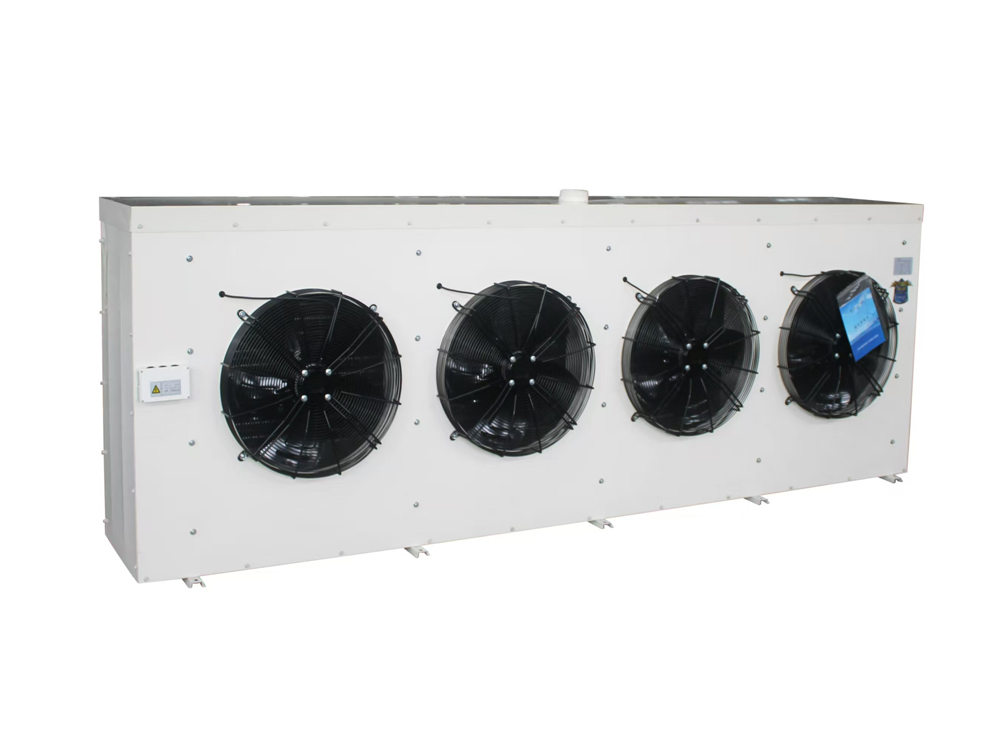
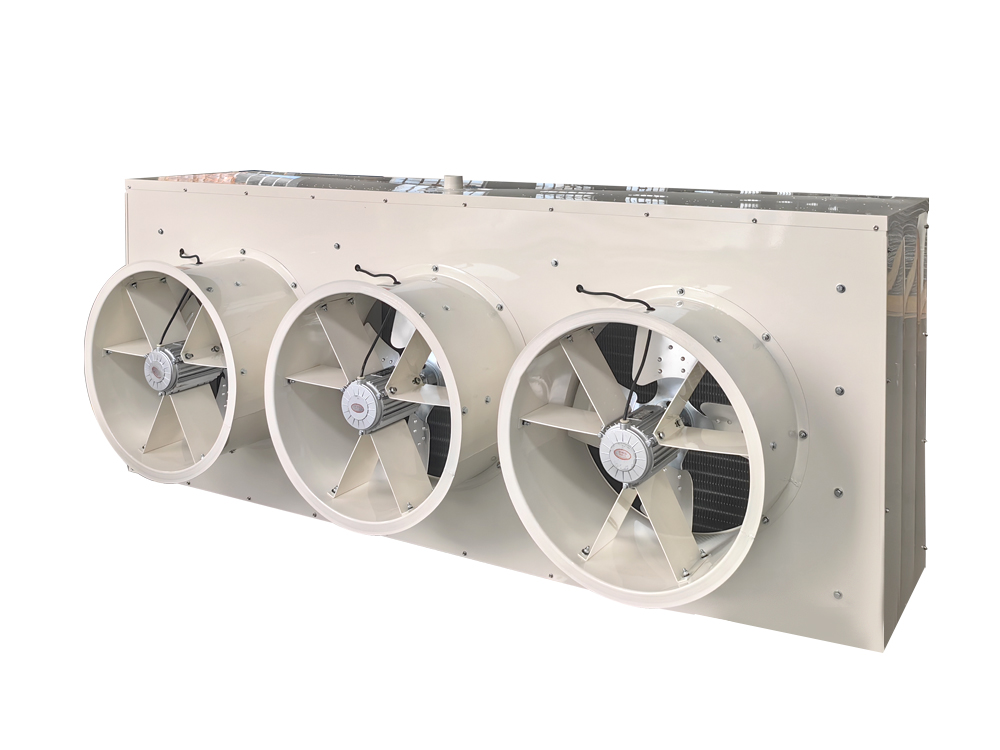
A water defrosting air cooler uses controlled water flow to remove frost from the evaporator surface. Instead of applying heat directly, water at a suitable temperature is distributed over the coil, melting frost through thermal exchange and mechanical washing.
Basic Working Principle
- Frost accumulates on the evaporator during normal operation
- The system initiates a defrost cycle
- Water is evenly sprayed or circulated across the coil surface
- Frost melts and is flushed away through drainage
- The system resumes cooling operation
This approach emphasizes uniform defrosting while minimizing sudden temperature changes within the cold space.
Structural and Functional Differences
Although both systems aim to achieve the same outcome—effective frost removal—their internal structures and operating logic differ significantly.
Structural Comparison
| Aspect | Water Defrosting Air Cooler | Electric Defrosting System |
|---|---|---|
| Defrosting medium | Water | Electric heating elements |
| Heat application | Indirect and distributed | Direct and localized |
| Temperature fluctuation | Relatively mild | Often sharp during defrost |
| Component stress | Lower thermal stress | Higher thermal stress |
| Moisture management | Integrated drainage design | Limited moisture removal |
This structural contrast directly affects performance consistency and long-term reliability.
Energy Efficiency Considerations
Energy efficiency is one of the most discussed aspects when comparing defrosting technologies.
Electric Defrosting Energy Profile
Electric defrosting introduces additional heat into the system, which must later be removed by the refrigeration cycle. This creates a secondary cooling demand, particularly in low-temperature environments.
Key implications include:
- Increased power consumption during defrost cycles
- Extended recovery time after defrost
- Potential temperature overshoot within storage areas
Water Defrosting Air Cooler Energy Profile
A water defrosting air cooler relies on water’s natural heat capacity rather than high-intensity electric heating. As a result:
- Defrosting energy demand is more balanced
- Less residual heat remains in the cooled space
- Overall system load remains more stable
In applications with frequent defrost cycles, this stability can translate into more predictable energy usage patterns.
Impact on Temperature Stability
Temperature control is critical in cold storage and processing environments, especially for sensitive goods.
Electric defrosting can cause noticeable temperature fluctuations, as heating elements rapidly raise coil temperatures. These fluctuations may temporarily affect room conditions, particularly in smaller or tightly controlled spaces.
By contrast, water defrosting air cooler systems typically produce gentler temperature changes. The gradual melting process reduces thermal shock and helps maintain a more consistent internal environment.
Maintenance and Operational Reliability
Maintenance requirements differ considerably between the two defrosting approaches.
Electric Defrosting Maintenance Factors
- Heating elements are subject to thermal fatigue
- Risk of element burnout over time
- Electrical connections require regular inspection
Failures in electric defrosting components can lead to incomplete defrost cycles or system downtime.
Water Defrosting Air Cooler Maintenance Factors
- Fewer high-temperature components
- Emphasis on water distribution and drainage cleanliness
- Reduced risk of localized overheating
While water systems require proper water management, they often experience lower component stress, contributing to long-term operational reliability.
Environmental and Operational Adaptability
The suitability of a defrosting system also depends on environmental and operational conditions.
Electric Defrosting Adaptability
Electric defrosting performs consistently across a wide range of climates but may be less efficient in large-scale or high-humidity environments where frost accumulation is frequent.
Water Defrosting Air Cooler Adaptability
A water defrosting air cooler is particularly effective in:
- High-humidity cold rooms
- Facilities requiring frequent defrost cycles
- Environments where energy efficiency is prioritized
Its ability to remove frost evenly makes it well-suited for applications where airflow consistency is essential.
System Longevity and Equipment Protection
Repeated thermal stress can affect the lifespan of refrigeration components.
Electric defrosting introduces rapid temperature changes that may:
- Accelerate metal fatigue
- Affect coil coatings over time
- Increase wear on surrounding components
Water defrosting air coolers, by contrast, apply defrosting energy more uniformly. This gentler approach helps protect coil surfaces and supports longer service life.
Operational Comparison Summary
The following table summarizes the operational differences between the two systems:
| Performance Dimension | Water Defrosting Air Cooler | Electric Defrosting System |
|---|---|---|
| Defrost uniformity | High | Moderate |
| Temperature impact | Low | Medium to high |
| Energy recovery time | Short | Longer |
| Component wear | Lower | Higher |
| System stability | Strong | Variable |
This comparison highlights why water-based defrosting is increasingly considered in modern refrigeration design.
Application-Oriented Evaluation
When selecting a defrosting method, decision-makers should consider:
- Frequency of defrost cycles
- Sensitivity of stored products
- Energy management goals
- Maintenance capabilities
A water defrosting air cooler aligns well with operations seeking stable temperature control, reduced energy spikes, and consistent airflow performance. Electric defrosting remains suitable for simpler systems where installation constraints or operational patterns favor direct heating.
Conclusion
The comparison between a water defrosting air cooler and electric defrosting systems reveals clear differences in energy behavior, temperature stability, maintenance demands, and long-term system impact. While electric defrosting remains a familiar and widely used solution, water defrosting offers a more balanced and system-friendly approach, particularly in environments requiring frequent defrosting and stable thermal conditions.
Rather than replacing one technology entirely, water defrosting air coolers expand the range of available options, allowing system designers and operators to better match defrosting methods to specific operational needs.
FAQ
Q1: Is a water defrosting air cooler suitable for low-temperature cold storage?
Yes, it is suitable for low-temperature environments, especially where frost accumulation is frequent and temperature stability is critical.
Q2: Does water defrosting increase humidity inside the cold room?
When properly designed with effective drainage, water defrosting does not significantly increase ambient humidity during normal operation.
Q3: How does defrost frequency affect system choice?
Systems requiring frequent defrost cycles often benefit from water defrosting due to reduced thermal stress and faster operational recovery.
Q4: Is electric defrosting still relevant in modern refrigeration systems?
Electric defrosting remains relevant for certain applications, particularly where system simplicity and limited infrastructure are priorities.


 Contact Number:+86-18858565929
