

 English
 русский
 Español
Content
- 1 Optimized Heat Exchange Surface Design
- 2 Intelligent Defrost Mechanisms
- 3 High-Efficiency Fan and Motor Configuration
- 4 Proper Refrigerant Distribution and Circuiting
- 5 Low Internal Volume and Refrigerant Charge
- 6 Condensate Management and Drainage
- 7 Compatibility with Advanced Controls
- 8 Airflow Pattern and Throw Distance
- 9 Corrosion-Resistant Coatings for Long-Term Performance
- 10 Low Airside Pressure Drop
- 11 Practical Considerations for Specification
- 12 Conclusion
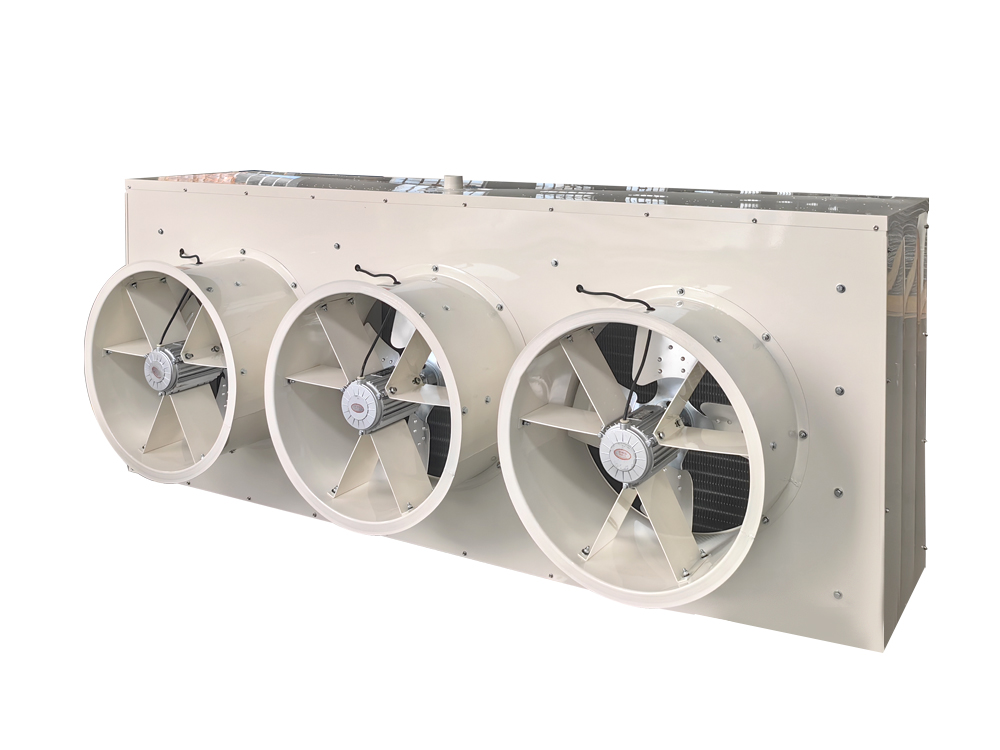
In modern refrigeration systems, energy efficiency is no longer an optional upgrade—it is a fundamental requirement. Among all components in a cold storage facility, the cold room evaporator plays a pivotal role in determining overall power consumption and system performance. Selecting or designing an evaporator with the right features can substantially reduce energy use while maintaining precise temperature control.
Optimized Heat Exchange Surface Design
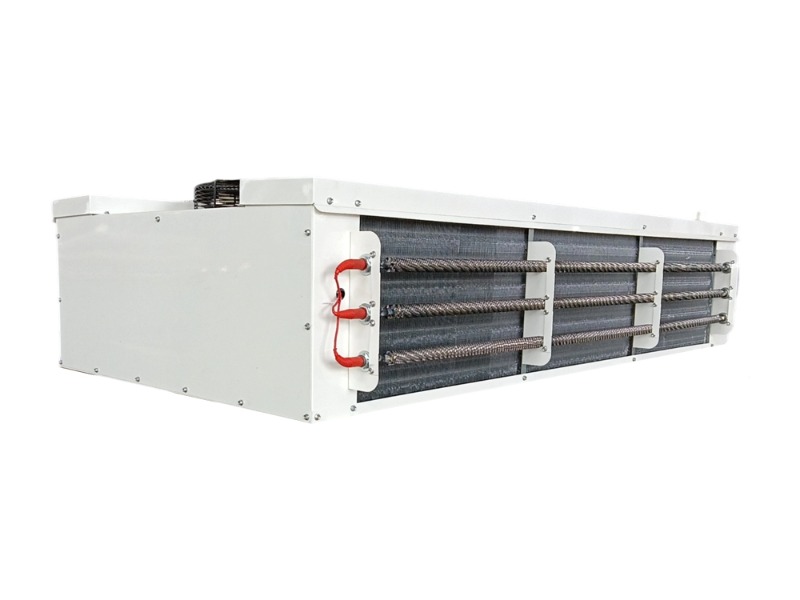
The primary function of any evaporator is to absorb heat from the cold room air. Energy efficiency begins with maximizing heat transfer per unit of refrigerant consumed. A well-designed cold room evaporator uses extended surface areas—such as enhanced fins and strategically spaced tubing—to improve thermal conductivity without forcing the compressor to work harder.
Key aspects include:
- Fin density and geometry: Corrugated or louvered fins increase turbulence, breaking the boundary layer of air that insulates the coil. This allows more heat to be transferred with less airflow resistance.
- Tube arrangement: Staggered tube patterns promote better air mixing compared to inline configurations, improving the overall heat transfer coefficient.
- Material selection: Copper tubes with aluminum fins remain a common high-efficiency pairing due to their excellent thermal properties and lightweight nature.
An evaporator that balances surface area with refrigerant flow ensures that the system reaches setpoint quickly and cycles off sooner, reducing runtime.
Intelligent Defrost Mechanisms
Frost accumulation on evaporator coils acts as an insulator, drastically reducing heat exchange efficiency. A cold room evaporator equipped with an intelligent defrost system can prevent unnecessary energy losses. Traditional timed defrosts often activate too early or too late, leading to either wasted heat input or excessive frost buildup.
Energy-saving defrost features include:
- Demand defrost: Uses sensors to detect actual frost thickness or pressure drop across the coil, triggering defrost only when necessary.
- Electric vs. hot gas defrost: While electric defrost is simple, hot gas defrost (redirecting warm discharge gas from the compressor) is generally more energy-efficient, as it reuses waste heat.
- Defrost termination control: Stopping the defrost cycle as soon as the coil reaches a set temperature (e.g., 5–10°C) prevents overheating and reduces post-defrost heat infiltration.
A smart defrost strategy can cut annual refrigeration energy use noticeably, especially in applications operating below freezing.
High-Efficiency Fan and Motor Configuration
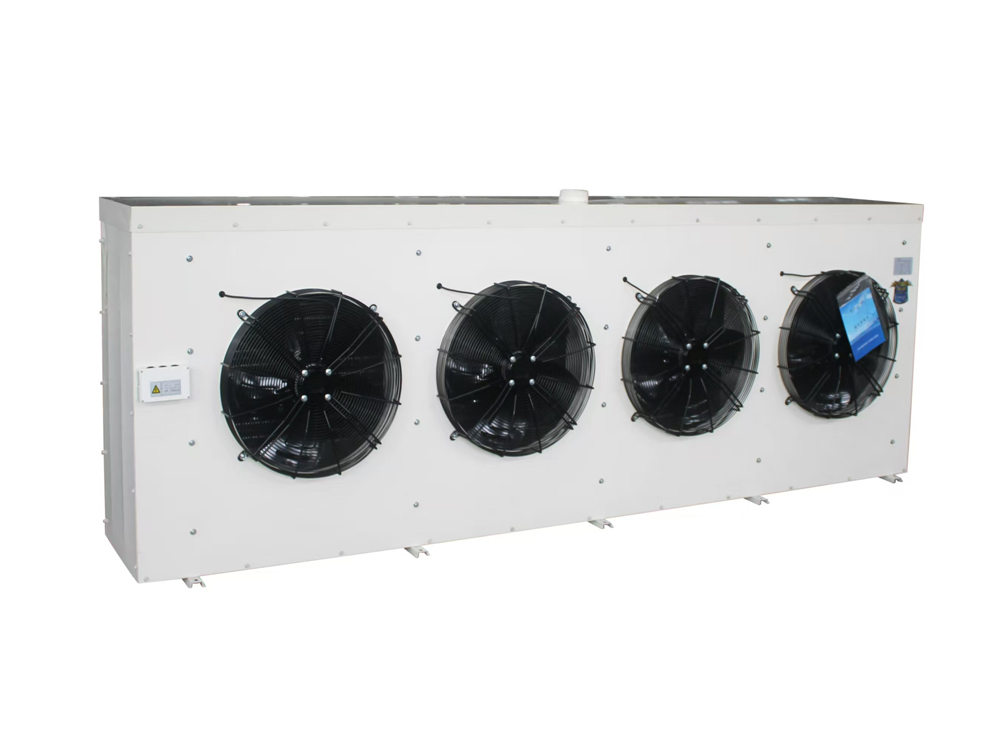
Air movement is essential for convective heat transfer, but fans consume electricity and add heat to the cold room. An energy-optimized cold room evaporator uses fans and motors selected for low specific fan power (SFP). Key design choices include:
- Electronically commutated (EC) motors: These offer higher efficiency (over 70% vs. 40–50% for shaded-pole motors) and allow speed control based on demand.
- Aerodynamic fan blades: Optimized blade shapes reduce noise and power draw while maintaining required airflow.
- Variable speed drives (VSDs): Adjust fan speed according to the actual cooling load, rather than running at full speed continuously.
Lower fan heat gain also means less cooling load, creating a virtuous cycle of efficiency improvement.
Proper Refrigerant Distribution and Circuiting
Uneven refrigerant distribution leads to some circuits being starved (causing superheating and inefficiency) while others flood. A high-quality cold room evaporator features carefully engineered refrigerant circuiting to ensure uniform flow across all tubes. This is often achieved through:
- Balanced feed systems using orifice distributors or small expansion devices.
- Multiple parallel circuits that match the evaporator’s capacity to the load profile.
- Sufficient number of refrigerant passes to maintain turbulent flow, which enhances heat transfer.
When refrigerant is evenly distributed, the evaporator operates at close to its theoretical maximum efficiency, reducing the need for excess refrigerant charge and lowering compressor work.
Low Internal Volume and Refrigerant Charge
Every gram of refrigerant inside the evaporator represents potential leakage risk and energy spent on pumping. Modern efficient designs aim to minimize the internal volume of the cold room evaporator without sacrificing heat transfer. Low internal volume means:
- Faster system response to load changes.
- Reduced refrigerant migration during off-cycles.
- Lower overall system charge, which is environmentally and economically beneficial.
This feature is particularly relevant for systems using high-global-warming-potential (GWP) refrigerants, though it remains advantageous even with low-GWP alternatives.
Condensate Management and Drainage
Poorly drained condensate or defrost water can re-freeze on the evaporator coil, forming ice bridges that block airflow. An energy-efficient cold room evaporator includes features that promote rapid water removal:
- Sloped drain pans with sufficient gradient (at least 3–5 degrees).
- Heated drain lines only where necessary, and with thermostatic control to avoid constant power draw.
- Anti-icing coatings on fins and drain pans to reduce adhesion of ice.
Efficient drainage reduces defrost frequency and duration, directly lowering energy consumption.
Compatibility with Advanced Controls
Even the most efficient evaporator cannot perform optimally without smart supervision. A cold room evaporator that integrates easily with electronic expansion valves (EEVs) and programmable logic controllers (PLCs) enables:
- Precise superheat control, preventing both floodback and inefficient high superheat.
- Adaptive defrost scheduling based on historical data and real-time humidity.
- Remote monitoring and fault detection.
Controllers can also stage evaporator fans or adjust airflow based on door openings or product loading, avoiding overcooling.
Comparative Overview of Energy-Saving Features
The table below summarizes the key features discussed and their primary energy-saving mechanisms:
| Feature Category | Energy-Saving Mechanism | Typical Efficiency Gain Potential |
|---|---|---|
| Enhanced heat exchange surface | Higher heat transfer per ΔT | Moderate to high |
| Demand defrost | Eliminates unnecessary defrost cycles | High |
| EC fans + VSD | Reduces fan power and heat gain | Moderate |
| Balanced refrigerant circuiting | Prevents inefficient superheat | Moderate |
| Low internal volume | Reduces pumping work and charge | Low to moderate |
| Efficient drainage | Prevents ice blockage and extra defrosts | Low |
| Advanced control compatibility | Enables adaptive, load-matching operation | High |
Note: Exact gains depend on application temperature, humidity, and usage patterns.
Airflow Pattern and Throw Distance
The way air circulates within the cold room directly affects the evaporator’s efficiency. A cold room evaporator with a well-matched airflow pattern ensures that cold air reaches all areas without short-circuiting. Key design parameters include:
- Throw distance: Should match room dimensions; too short leaves hot spots, too long increases fan energy.
- Air velocity over coils: Typically 2–3 m/s for medium-temperature rooms, 1.5–2.5 m/s for freezers. Lower velocities reduce fan power but may require larger coil surface.
- Directional louvers or adjustable grilles: Allow fine-tuning of air distribution without changing fan speed.
Proper airflow avoids stratification (warm air at the ceiling) and reduces the average room temperature offset required to maintain product temperature, saving energy.
Corrosion-Resistant Coatings for Long-Term Performance
While not immediately obvious, corrosion of fins and tubes degrades heat transfer over time. A cold room evaporator used in humid or salty environments (e.g., seafood cold stores) benefits from:
- Epoxy or e-coatings on aluminum fins.
- Pre-coated copper tubes or stainless steel options for extreme conditions.
- Hydrophilic coatings that promote water sheeting rather than droplet formation, reducing air resistance.
Maintaining clean, corrosion-free surfaces means the evaporator retains its original efficiency years after installation, avoiding performance drift.
Low Airside Pressure Drop
Pressure drop across the evaporator forces fans to work harder. An energy-efficient cold room evaporator is designed with:
- Wider fin spacing (e.g., 4–6 mm for freezers vs. 3–4 mm for coolers) to reduce icing and airflow resistance.
- Optimized coil depth (typically 2–4 rows) balancing heat transfer and pressure drop.
- Smooth entry and exit transitions to minimize turbulence.
Lower pressure drop directly translates to lower fan energy consumption—often a hidden but significant contributor to total system energy use.
Practical Considerations for Specification
When specifying a cold room evaporator for energy efficiency, consider the application’s specific conditions:
- Operating temperature: Freezers below -18°C require different fin spacing and defrost approaches than chiller rooms at +2°C.
- Relative humidity: High-humidity rooms (e.g., fruit storage) benefit from larger coil surfaces and more frequent but shorter defrosts.
- Refrigerant type: CO2, ammonia, propane, and HFOs have different heat transfer characteristics affecting optimal circuiting.
- Expected load profile: A room with frequent door openings needs better airflow and faster pull-down capability.
No single evaporator design is perfect for all applications. The most energy-efficient solution comes from matching features to operating reality.
Conclusion
Achieving high energy efficiency in a cold storage facility begins with selecting or designing the right cold room evaporator. Key features include optimized heat exchange surfaces, intelligent defrost mechanisms, high-efficiency fans and motors, balanced refrigerant circuiting, low internal volume, effective drainage, control compatibility, proper airflow design, corrosion resistance, and low airside pressure drop. Each of these elements contributes to reducing compressor runtime, fan energy, and defrost heat input—without compromising temperature stability.
By focusing on these engineering details, facility owners and refrigeration professionals can lower operational costs and environmental impact.


 Contact Number:+86-18858565929
