

 English
 русский
 Español
Content
- 1 Why Engineers Rely on Stainless Steel Pipe in Cooling Systems
- 2 Core Stainless Steel Pipe Types Used in Refrigeration
- 3 Seamless vs Welded Stainless Steel Pipe: Choosing the Right Process
- 4 Selecting the Right Stainless Grade for Condensers and Air Coolers
- 5 Sizing, Wall Thickness, and Pressure Considerations
- 6 Installation and Maintenance Practices That Extend Service Life
- 7 Application Scenarios Where Stainless Pipe Delivers Value
- 8 How to Evaluate a Stainless Pipe Supplier
- 9 Frequently Asked Questions About Stainless Steel Pipe
- 9.0.1 Q1: What is the main difference between seamless and welded stainless steel pipe?
- 9.0.2 Q2: Is grade 316 always necessary for refrigeration projects?
- 9.0.3 Q3: Why do some installers prefer copper-jointed stainless pipe?
- 9.0.4 Q4: What documentation should I request when buying stainless steel pipe?
- 9.0.5 Q5: How should stainless pipe be stored before installation?
- 10 Planning Your Next Stainless Pipe Specification
Why Engineers Rely on Stainless Steel Pipe in Cooling Systems
Refrigeration and cold-chain equipment operates under a demanding mix of conditions. Refrigerant lines and heat exchanger circuits face repeated temperature swings, humidity, condensation, and in many installations, aggressive outdoor or marine air. Choosing the right stainless steel pipe is therefore less about picking a generic tube and more about matching material, wall thickness, manufacturing method, and joining design to the duty the system must carry for years.
This guide walks through the decisions that matter most for procurement teams, system designers, and maintenance managers. It covers how seamless and welded tubing differ, which alloy grades perform best in condensing and evaporating circuits, how copper joint designs simplify field installation, and which specification details to request from a supplier before placing an order.
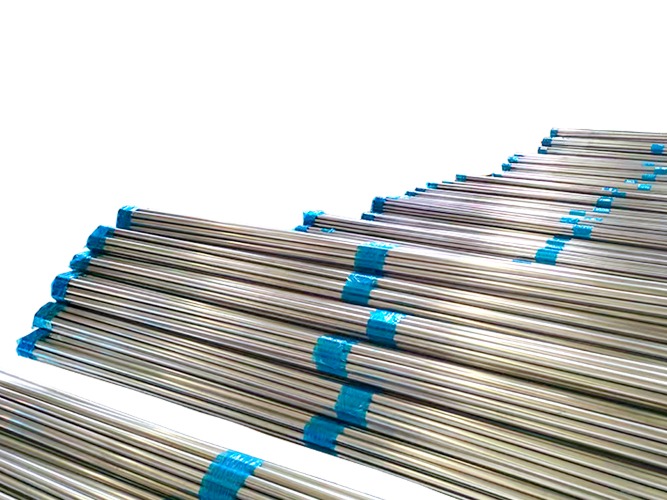
A well-specified stainless steel straight pipe reduces leak risk, limits corrosion-driven maintenance, and keeps refrigerant circuits stable over a long service life.
Core Stainless Steel Pipe Types Used in Refrigeration
Not every stainless tube suits every cooling application. Three product families dominate refrigeration projects, and each serves a slightly different role in the circuit.
Standard Straight Pipe for General Circuits
Plain straight lengths form the backbone of most condenser and air cooler piping. They are cut to length on site or supplied in fixed lengths, then bent, brazed, or flanged according to the layout. Their simplicity makes them the most economical choice when the pipe run is long and the geometry is predictable.
Copper-Jointed Stainless Pipe for Faster Installation
Pipes supplied with a factory-fitted copper joint allow installers to braze connections using familiar techniques used for copper refrigerant lines. This reduces the need for specialized stainless welding on site, which is valuable when projects run on tight schedules or when field crews are primarily trained on copper systems.
Alloy Copper-Colored Stainless Tube
Certain finishes give the tube a copper-toned appearance while retaining the stainless base structure. The coating and alloy layer are selected to improve compatibility with brazing filler and to support thermal cycling in evaporator sections.
- Standard straight pipe: lowest cost per meter, suited to long runs with few fittings
- Copper-jointed pipe: faster brazing, fewer specialist welders needed on site
- Alloy copper-colored tube: enhanced brazing compatibility and thermal fatigue resistance
Seamless vs Welded Stainless Steel Pipe: Choosing the Right Process
The manufacturing route has a direct effect on pressure capacity, surface finish, and long-term reliability. Buyers often ask whether seamless tube is always better, and the honest answer is that it depends on pressure, budget, and the diameter range required.
How Seamless Tube Is Made
Seamless pipe starts from a solid billet that is pierced and drawn into a hollow shape without a longitudinal joint. The absence of a weld seam gives uniform wall thickness and removes the heat-affected zone that welding introduces, which is why seamless tube is preferred for high-pressure refrigerant circuits.
How Welded Tube Is Made
Welded pipe is formed from flat strip that is rolled into a tube and seam-welded, often followed by solution annealing and sizing. Modern welding and inspection methods produce highly consistent joints, and welded tube typically costs less at larger diameters and wider wall ranges.
Side-by-Side Comparison
| Feature | Seamless Pipe | Welded Pipe |
|---|---|---|
| Pressure capacity | Highest, suited to high-pressure circuits | High, when the weld is fully inspected |
| Wall uniformity | Very consistent | Consistent with controlled forming |
| Relative cost | Higher | Lower, especially at larger sizes |
| Typical use | High-pressure refrigerant lines | Condensers, air coolers, general circuits |
Factors Buyers Should Weigh
Selection rarely hinges on one variable. Engineers usually review the following before deciding:
- Operating pressure and safety margin required by the design code
- Corrosion environment, including coastal or washdown exposure
- Diameter and wall range, which can favor welded tube at scale
- Joining method on site, including brazing or flanged connections
- Inspection and certification requirements for the project
Selecting the Right Stainless Grade for Condensers and Air Coolers
Grade selection is one of the most consequential decisions in the specification. The two grades encountered most often in refrigeration are 304 and 316, and they behave differently once chlorides, humidity, and cleaning chemicals enter the picture.
Grade 304
A general-purpose austenitic stainless steel with good corrosion resistance in indoor and typical commercial environments. It is widely used in cold rooms, food processing cooling, and most air-cooled condenser applications away from the coast.
Grade 316
Adds molybdenum, which improves resistance to pitting in chloride-rich atmospheres. It is the usual choice for marine refrigeration, coastal installations, and sites where saline mist or aggressive washdown chemicals are present.
As a practical rule, many projects specify 304 for inland installations with controlled humidity and 316 wherever chloride exposure is expected. Where budget is tight, engineers sometimes evaluate the actual chloride load and cleaning regime before defaulting to the higher grade.
Sizing, Wall Thickness, and Pressure Considerations
Diameter and wall thickness determine both the flow capacity and the pressure rating of the line. Undersized tube raises pressure drop and can starve evaporators, while excessive wall thickness adds cost and weight without improving performance.
Typical Specification Ranges
Refrigeration lines commonly fall within a defined band of outside diameters and wall thicknesses. The table below summarizes a representative range that engineers often use as a starting point for preliminary design.
| Application | Common Outside Diameter | Typical Wall Range |
|---|---|---|
| Small evaporator circuits | 6 to 12 mm | 0.7 to 1.0 mm |
| Condenser and air cooler headers | 16 to 32 mm | 1.0 to 1.5 mm |
| High-pressure main lines | 25 to 50 mm | 1.5 to 2.5 mm |
Final values must always be verified against the design pressure, the applicable pressure vessel or piping code, and the manufacturer's rated working pressure at the operating temperature.
Installation and Maintenance Practices That Extend Service Life
Even a correctly specified line can fail early if handling, brazing, or cleaning is poor. Installation discipline matters as much as material selection.
Brazing and Joint Preparation
Joints should be cleaned to bright metal before brazing, and the flux or filler must match the base alloy. Overheating a thin wall can cause oxidation scale that reduces corrosion resistance and creates weak points, so controlled heat input is essential.
Preventing Contamination
Dust, cutting oil, and iron particles left inside a line can circulate through the system and damage compressors. Capping pipe ends during storage and purging with dry nitrogen during brazing are simple steps that prevent expensive downstream problems.
Application Scenarios Where Stainless Pipe Delivers Value
Stainless tubing earns its place in environments where carbon steel or copper would corrode, deform, or lose strength too quickly. The following scenarios show where its advantages are most visible.
- Cold-chain warehousing, where frequent washdowns and humid air accelerate corrosion on standard metals
- Food and beverage cooling loops, which require surfaces that resist cleaning agents and remain hygienic
- Marine refrigeration, where saline air demands the chloride resistance of higher-molybdenum grades
- Industrial process cooling, where high pressures and temperature cycling reward a robust material
How to Evaluate a Stainless Pipe Supplier
The supplier shapes the consistency of every batch you receive. A short checklist during evaluation can prevent problems that only appear after installation.
Documentation to Request
Ask for material test certificates that confirm chemical composition and mechanical properties for the exact heat numbers shipped. Dimensional inspection reports and, where required, non-destructive test records should accompany each lot.
Manufacturing Capability
A capable producer should be able to supply both seamless and welded options, handle custom lengths, and offer copper-jointed variants without outsourcing the joining step. Stable production capacity matters when your project requires repeat orders over several seasons.
| Evaluation Point | What Good Practice Looks Like |
|---|---|
| Material traceability | Heat-number linked certificates for every lot |
| Dimensional control | Documented tolerances and sampling records |
| Customization | Non-standard lengths and joint configurations available |
| Lead time reliability | Clear production schedule and shipping commitments |
Frequently Asked Questions About Stainless Steel Pipe
Q1: What is the main difference between seamless and welded stainless steel pipe?
Seamless pipe is drawn from a solid billet and has no longitudinal weld, giving uniform wall thickness and higher pressure capacity. Welded pipe is formed from strip and seam-welded, which is cost-effective and performs well when the weld is fully inspected.
Q2: Is grade 316 always necessary for refrigeration projects?
Not always. Grade 304 suits most inland installations with controlled humidity. Grade 316 is recommended where chloride exposure from coastal air, marine environments, or aggressive cleaning chemicals is expected.
Q3: Why do some installers prefer copper-jointed stainless pipe?
Copper joints allow brazing with techniques familiar to refrigeration technicians, which reduces dependence on specialist stainless welding and can shorten installation time on busy sites.
Q4: What documentation should I request when buying stainless steel pipe?
Request material test certificates tied to heat numbers, dimensional inspection records, and any non-destructive test results required by your project specification or applicable code.
Q5: How should stainless pipe be stored before installation?
Keep pipe capped at both ends, store it off the ground in a dry area, and avoid contact with carbon steel tools or debris that could leave iron contamination on the surface.
Planning Your Next Stainless Pipe Specification
A clear specification saves time, reduces rework, and protects system reliability. Define the operating pressure, corrosion environment, diameter and wall range, joining method, and documentation requirements before requesting pricing. When these inputs are ready, you can compare options on a like-for-like basis and move forward with confidence.
Ready to narrow down your specification? Contact the supplier team with your drawings and operating conditions to receive a tailored quotation for your project.


 Contact Number:+86-18858565929

