

 English
 русский
 Español
Content
- 1 What Is an Air-Cooled Condensing Unit?
- 2 Key Components and Their Functional Roles
- 3 The Refrigeration Cycle: A Step-by-Step Breakdown
- 4 Performance and Efficiency: What to Expect
- 5 Major Application Fields
- 6 Frequently Asked Questions
- 6.1 What are the main differences between air-cooled and water-cooled condensing units?
- 6.2 How does ambient temperature affect performance?
- 6.3 Can air-cooled condensing units be used in sub-zero outdoor conditions?
- 6.4 What is the typical service life of an air-cooled condensing unit?
- 6.5 How do I select the right capacity for my application?
What Is an Air-Cooled Condensing Unit?
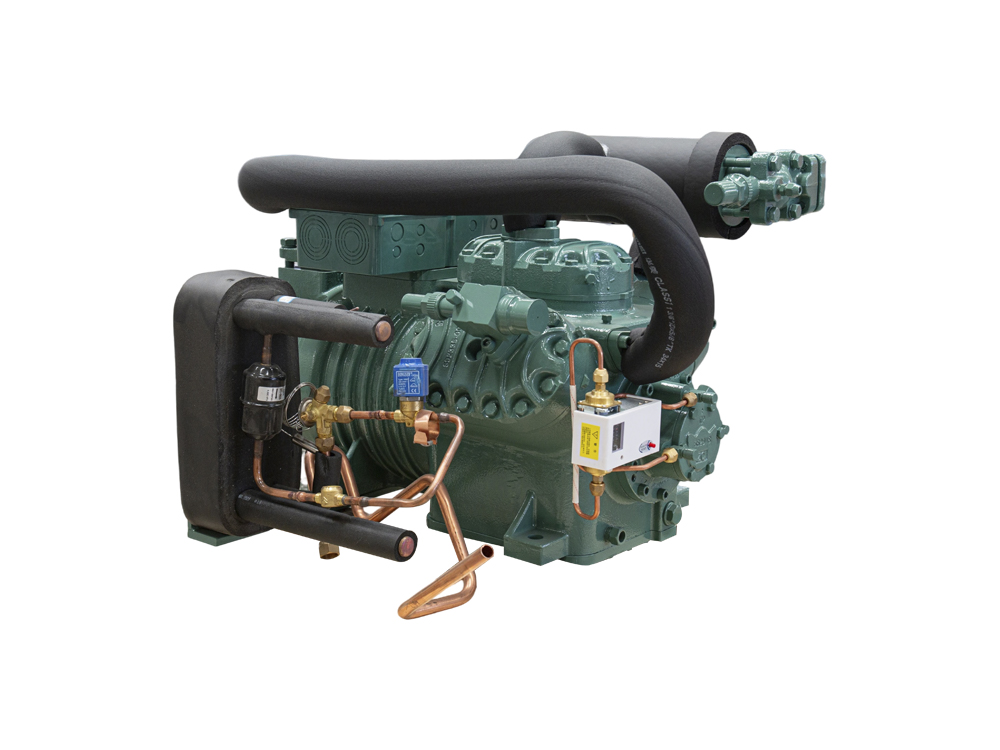
An air-cooled condensing unit is a self-contained refrigeration module that rejects heat from a system directly into the ambient air. It integrates one or more compressors, an air-cooled condenser coil with forced-draft fans, and all necessary control and safety devices.
How does it work? The compressor elevates the refrigerant vapor to a high-pressure, high-temperature state. This hot vapor enters the condenser coil, where ambient air—driven by fans—removes the superheat and latent heat, causing the refrigerant to condense into a liquid. The liquid then passes through an expansion device to the evaporator, where it absorbs heat, and the cycle repeats.
The core advantage is clear: water-free heat rejection with simpler installation, lower maintenance, and no cooling tower or water treatment costs. This makes air-cooled units the dominant choice for commercial refrigeration, industrial process cooling, and cold chain logistics across moderate climate zones.
Key Components and Their Functional Roles
Each component within the condensing unit plays a specific, indispensable role in achieving reliable and efficient operation. Understanding these parts is essential for proper selection and troubleshooting.
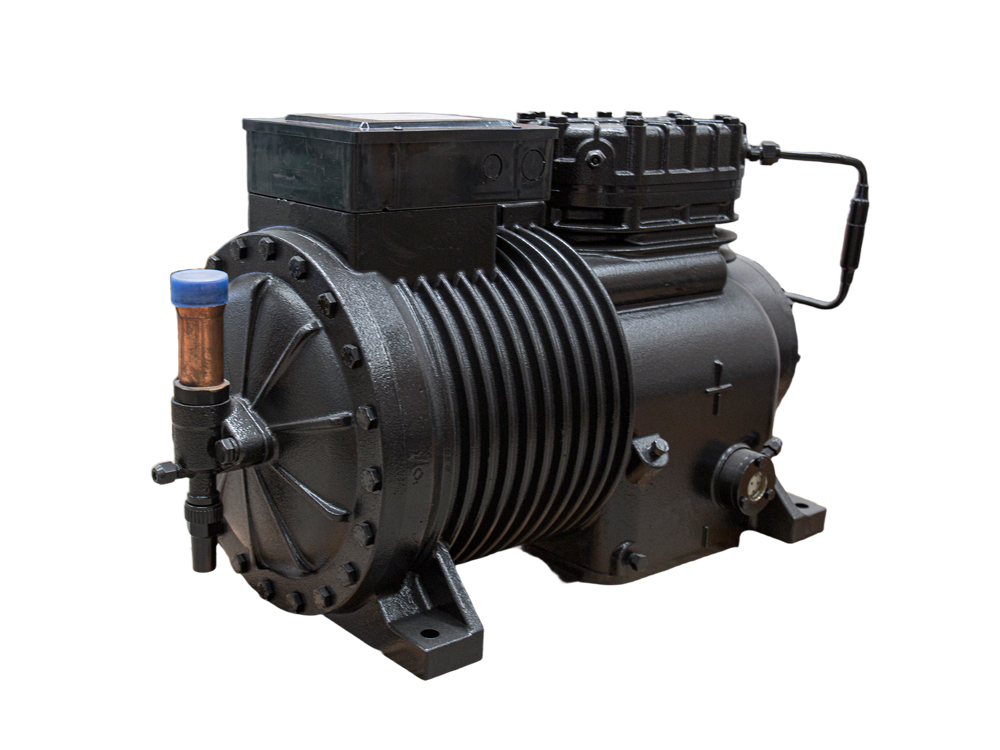
Compressor
The compressor is the primary energy consumer and the driving force of the cycle. It draws low-pressure refrigerant vapor from the evaporator, compresses it to a discharge pressure corresponding to the condensing temperature, and maintains the pressure differential necessary for the expansion device to function correctly. Common types include scroll, reciprocating, and screw compressors.
Air-Cooled Condenser Coil
Typically constructed from copper tubes with aluminum fins, this coil is the heat exchanger where refrigerant vapor releases its latent heat. The finned surface maximizes the heat transfer area, while fan-forced airflow ensures efficient removal of heat to the atmosphere.
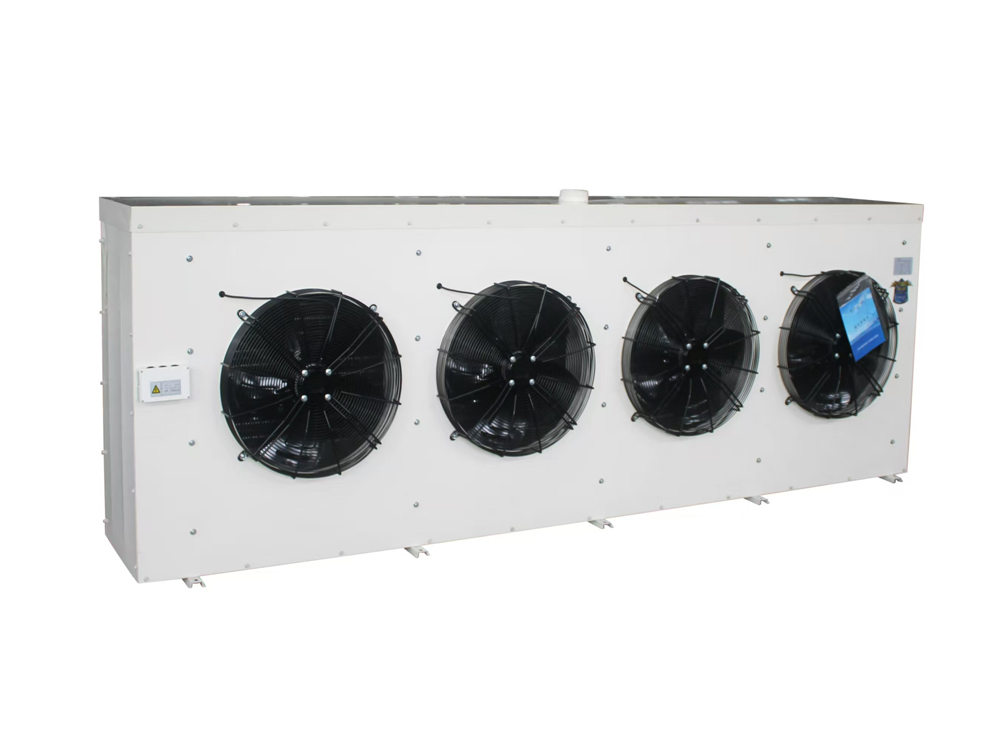
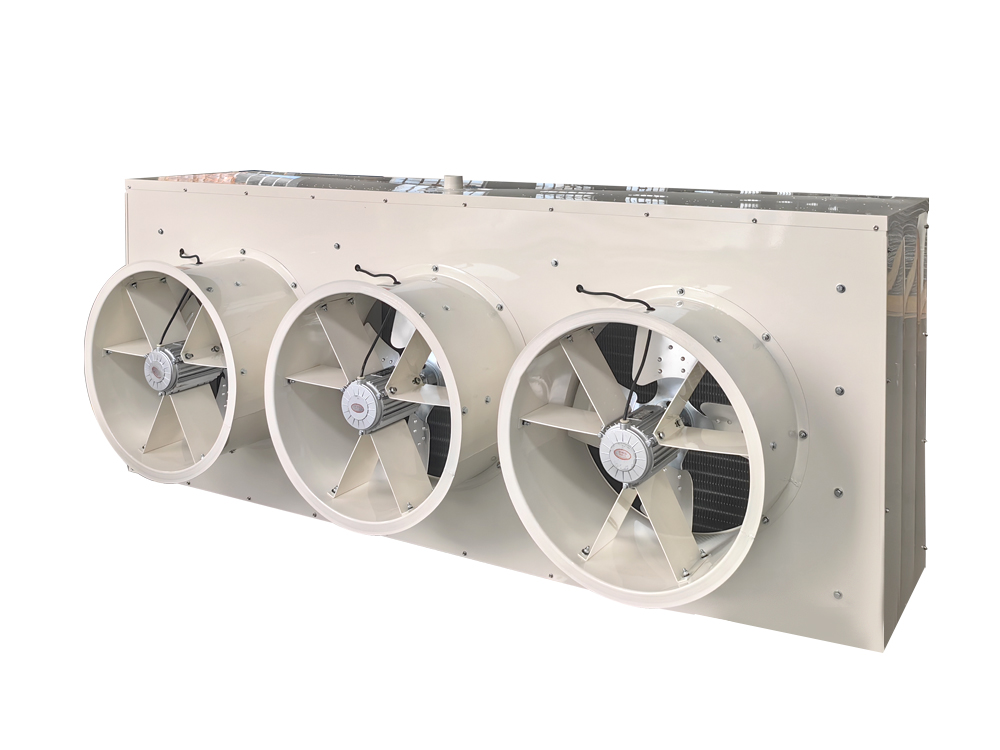
Condenser Fans
One or more axial or centrifugal fans provide the required airflow across the coil. The fan performance directly dictates the condensing capacity and the unit's ability to operate under high ambient temperatures. Fan speed control is often employed for noise reduction and energy savings during partial load.
Liquid Receiver (Optional but common)
The receiver stores liquid refrigerant downstream of the condenser. It accommodates refrigerant charge variations due to load changes or ambient temperature shifts, ensuring a steady liquid supply to the expansion valve at all times.
Filter Drier and Sight Glass
The filter drier removes moisture, acid, and particulate contaminants that can degrade system performance or damage the compressor. A sight glass downstream provides a visual indication of refrigerant state and moisture content.
The Refrigeration Cycle: A Step-by-Step Breakdown
The air-cooled condensing unit operates on the vapor-compression refrigeration cycle, which consists of four continuous stages. The following flowchart visualizes the sequence:
- Compressor
- →
- Condenser (air-cooled)
- →
- Expansion Device
- →
- Evaporator
- →
- (return to compressor)
1. Compression
The compressor draws in low-pressure, low-temperature saturated vapor from the evaporator and increases its pressure to the condensing pressure. This also raises the temperature of the vapor well above the ambient air temperature, creating the driving temperature difference required for heat rejection.
2. Condensation (Heat Rejection)
Inside the air-cooled condenser coil, the high-pressure vapor undergoes three distinct heat-rejection phases:
- Desuperheating: The vapor is cooled from the discharge temperature down to the saturation temperature (typically 5–10% of the coil length).
- Phase change (condensing): The refrigerant releases its latent heat of vaporization and changes from a gas to a liquid. This is where the bulk of heat rejection occurs, accounting for over 80% of the coil's duty.
- Sub-cooling: The liquid is cooled below the saturation point, typically by 2–5 K, which increases the net refrigerating effect and prevents flash gas at the expansion valve.
3. Expansion
The high-pressure subcooled liquid passes through a thermal expansion valve (or electronic expansion valve), where the pressure is abruptly reduced. This causes a small portion of the liquid to flash into vapor, lowering the temperature of the refrigerant mixture to the evaporator design temperature.
4. Evaporation
In the evaporator, the low-pressure, low-temperature refrigerant absorbs heat from the cooled space or process. The refrigerant boils completely into a superheated vapor, ensuring no liquid enters the compressor. The cycle then repeats.
Performance and Efficiency: What to Expect
The efficiency of an air-cooled condensing unit is most commonly expressed as the coefficient of performance (COP), defined as the ratio of cooling capacity (kW) to total electrical power input (kW). A higher COP indicates better energy efficiency.
Typical COP Ranges
Under standard rating conditions (ambient air at 35°C, evaporating temperature at -10°C), a well-designed air-cooled unit typically achieves a COP between 2.0 and 3.5. For comparison, water-cooled systems often attain COPs of 4.0 to 5.5, but they require additional water treatment and pumping energy.
Key factors that influence system COP include:
- Ambient temperature: Every 1°C rise in ambient temperature reduces the COP by approximately 1.5–2.5%.
- Evaporating temperature: A 1°C increase in evaporating temperature improves COP by roughly 3–4%.
- Compressor efficiency and fan motor power.
Minimum Efficiency Thresholds (Typical Industry Benchmarks)
For commercial and industrial applications, energy efficiency programs often require minimum COP values based on the operating temperature category:
| Temperature Category | Typical Evaporating Temp. | Application Example | Minimum COP (at 35°C amb.) |
|---|---|---|---|
| High Temperature (HT) | −5°C to +10°C | Chillers, beverage cooling | 3.0 |
| Medium Temperature (MT) | −15°C to −5°C | Cold rooms, supermarkets | 2.5 |
| Low Temperature (LT) | −35°C to −20°C | Freezers, ice cream storage | 2.0 |
Note: Actual performance depends on refrigerant type, component selection, and system design.
Major Application Fields
Due to their robust design and installation flexibility, air-cooled condensing units are widely deployed across multiple industries. Their scalability ranges from small integral units (< 2 kW) to large industrial systems (> 500 kW).
- Food Cold Chain & Storage: Maintaining precise temperatures in cold rooms, blast freezers, and ripening chambers for meat, dairy, and fresh produce.
- Industrial Process Cooling: Removing heat from manufacturing equipment, chemical reactors, plastic molding, and laser cutting systems.
- Pharmaceutical & Medical Storage: Ensuring stable, controlled environments for vaccines, biologics, and sensitive compounds.
- Commercial Refrigeration: Supermarket display cases, walk-in coolers, and ice-making machines.
- Marine & Offshore: Shipboard provision cooling and container refrigeration units, where water availability is limited.
- Logistics & Distribution: Temperature-controlled warehouses and cross-docking facilities for perishable goods.
In each application, the selection criteria focus on the expected ambient temperature profile, required evaporation temperature, and annual operating hours to balance initial cost against energy consumption.
Frequently Asked Questions
What are the main differences between air-cooled and water-cooled condensing units?
Air-cooled units use ambient air as the heat sink, eliminating the need for cooling towers, water pumps, and water treatment. They are simpler to install and maintain, but they operate at higher condensing temperatures, which reduces efficiency. Water-cooled units achieve lower condensing temperatures and higher COPs but require a reliable water source and more complex maintenance.
How does ambient temperature affect performance?
Performance degrades as ambient temperature rises because the condensing pressure and temperature increase, forcing the compressor to work harder. For each 1°C rise above the design ambient, the cooling capacity decreases by roughly 1.5–2.0%, while power consumption increases by about 1.0–1.5%. This is why capacity tables always reference specific ambient temperatures.
Can air-cooled condensing units be used in sub-zero outdoor conditions?
Yes, but special precautions are required. In low ambient conditions, the condensing pressure may drop too low, causing expansion valve malfunction. Head pressure control methods—such as fan cycling, variable-speed fans, or condenser flooding—are employed to maintain stable operation down to −30°C or lower.
What is the typical service life of an air-cooled condensing unit?
With proper maintenance (regular coil cleaning, refrigerant charge checks, and compressor oil monitoring), a well-manufactured unit can operate reliably for 15 to 20 years. Corrosion protection and coil coatings are recommended for coastal or industrial environments.
How do I select the right capacity for my application?
Capacity selection is based on the total heat load at the evaporator (including product load, infiltration, and internal heat gains), the desired evaporating temperature, and the summer design ambient temperature. It is essential to apply correction factors for altitude, voltage variations, and safety margins (typically 10–15% oversizing).


 Contact Number:+86-18858565929
