

 English
 русский
 Español
Content
- 1 Where the Condensing Unit Fits in a Refrigeration System
- 2 How an Air-Cooled Condensing Unit Works
- 3 Open Packing Design Compared With Hermetic Design
- 4 Air-Cooled Versus Water-Cooled Condensing Units
- 5 Typical Applications in Cold Storage and Food Processing
- 6 Key Specifications to Check Before You Buy
- 7 A Step-by-Step Selection Process
- 8 Installation and Site Considerations
- 9 Maintenance Routine and Common Faults
- 10 Energy Use and Operating Cost
- 11 Frequently Asked Questions
- 11.0.1 Q1: What is the main difference between an air-cooled condensing unit and a remote condenser?
- 11.0.2 Q2: How long does an air-cooled condensing unit typically last?
- 11.0.3 Q3: Can an air-cooled condensing unit operate effectively in very hot climates?
- 11.0.4 Q4: Which refrigerants are commonly used with open packing condensing units?
- 11.0.5 Q5: How often should the condenser coil be cleaned?
- 11.0.6 Q6: What information should I prepare before asking a supplier to check a selection?
Where the Condensing Unit Fits in a Refrigeration System
In most vapor-compression refrigeration systems, the job of rejecting heat collected from storage spaces falls to the condensing section. An air-cooled condensing unit packages the compressor, the condenser coil, the fan, and the basic controls into one assembly installed outside the space being cooled. It receives low-pressure refrigerant vapor from the evaporator, compresses it, and delivers it to the condenser, where the heat carried from inside the room is released to outdoor air. Because every other part of the system depends on this step, the condensing unit effectively sets the ceiling for how well the whole installation performs.
The layout is easier to understand when the main components are shown in sequence, as in the diagram below.
Figure 1: Basic refrigerant loop in an air-cooled system
The hot discharge gas leaving the compressor is always warmer than the outdoor air it must reject heat to. That temperature difference drives the whole process, and it is the reason ambient conditions have such a strong effect on capacity.
How an Air-Cooled Condensing Unit Works
The working cycle is simple to describe, but several details determine whether the equipment performs as expected in daily operation. Each stage hands the refrigerant to the next in a continuous loop:
- The compressor draws in refrigerant vapor from the evaporator at low pressure and low temperature.
- Compression raises the pressure and temperature of the vapor so that it becomes hotter than the outdoor air.
- The fan pulls ambient air across the condenser coil, carrying heat away from the refrigerant.
- The refrigerant condenses into a liquid as it gives up heat, then flows toward the expansion device.
- The expansion valve lowers the pressure, and the cold liquid enters the evaporator to absorb heat again.
The key point is that the condenser must reject more heat than the evaporator absorbs, because the energy added by the compressor is also released at the coil. Engineers therefore size the coil and fan for the full heat rejection load at the hottest expected ambient temperature, not for average weather.
Condensing temperature and outdoor air
The condensing temperature of the refrigerant always sits above the outdoor air temperature. In many commercial designs, the working gap between the two is planned in the range of 10 to 15 degrees Celsius. When outdoor air is hot, the condensing temperature rises, the pressure inside the condenser increases, and the compressor must work harder to maintain the same cooling output. Good design keeps this gap small by providing enough coil area and reliable airflow.
Why airflow matters as much as coil area
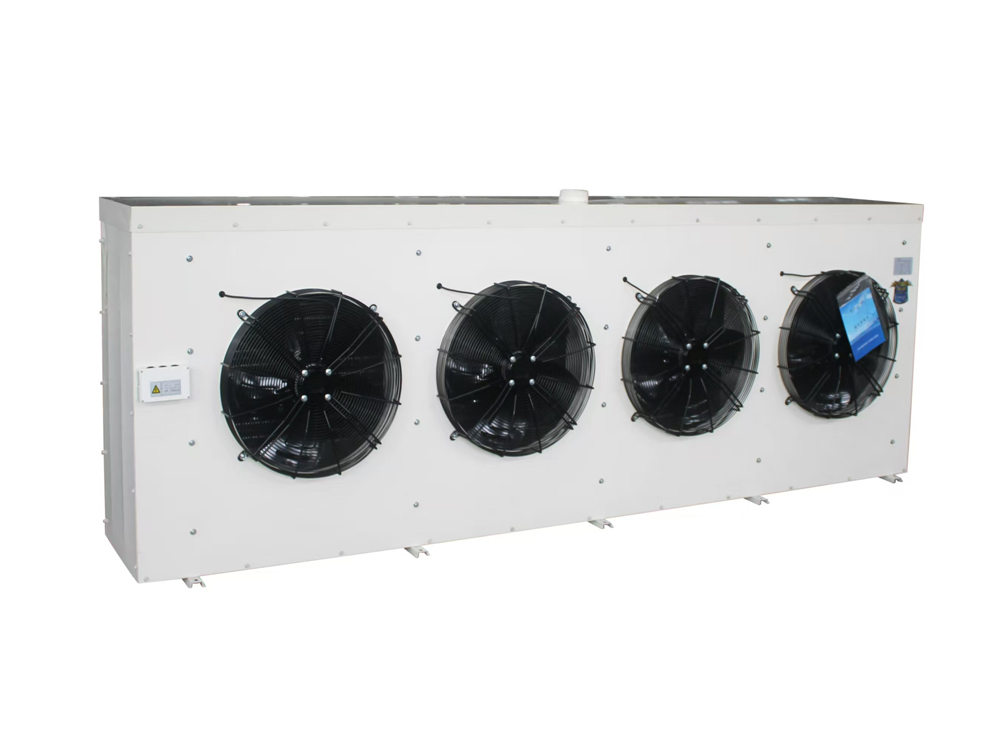
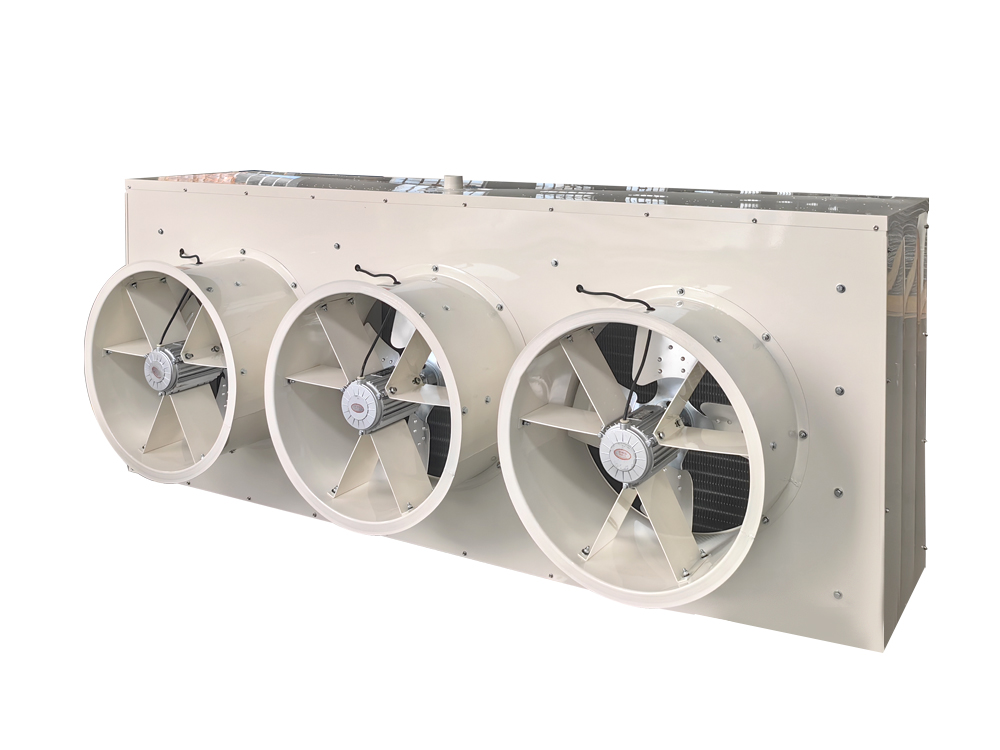
A large coil delivers its potential only when air moves across it evenly. Fan speed, blade pitch, motor condition, and the clearance around the unit all shape the airflow pattern. A modest loss of airflow can raise the condensing temperature by several degrees, which increases energy use, reduces capacity during peak hours, and shortens compressor life over time.
Field experience shows that many underperforming condensing units have adequate coil area on paper. The real problem is usually restricted airflow caused by dirt, poor placement, or a fan that has slowed down.
Open Packing Design Compared With Hermetic Design
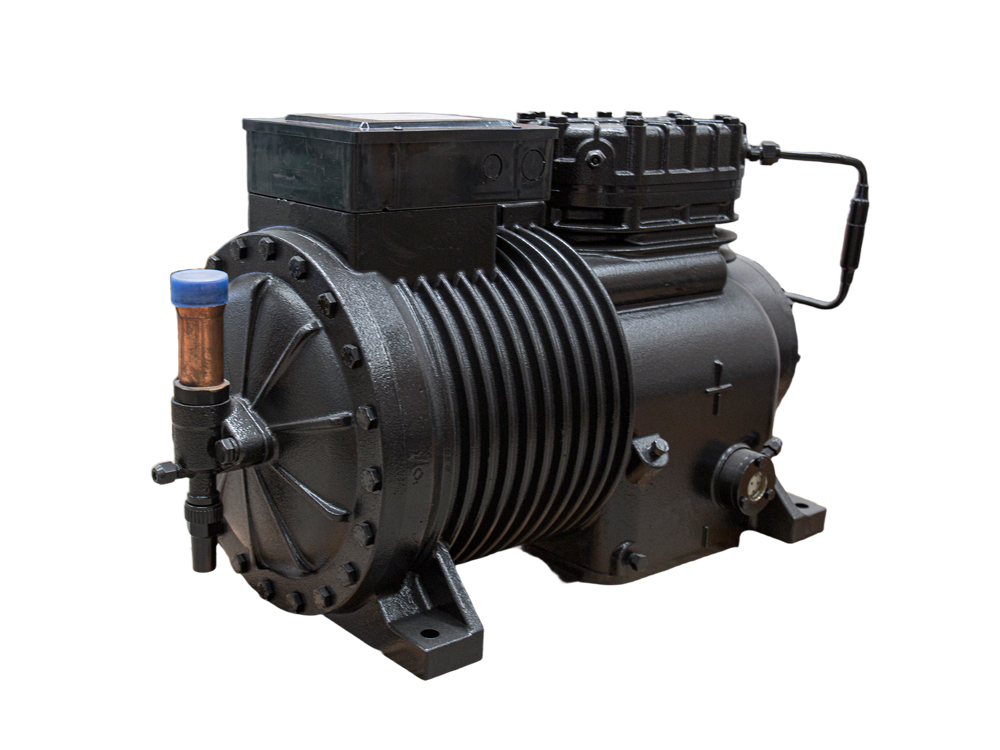
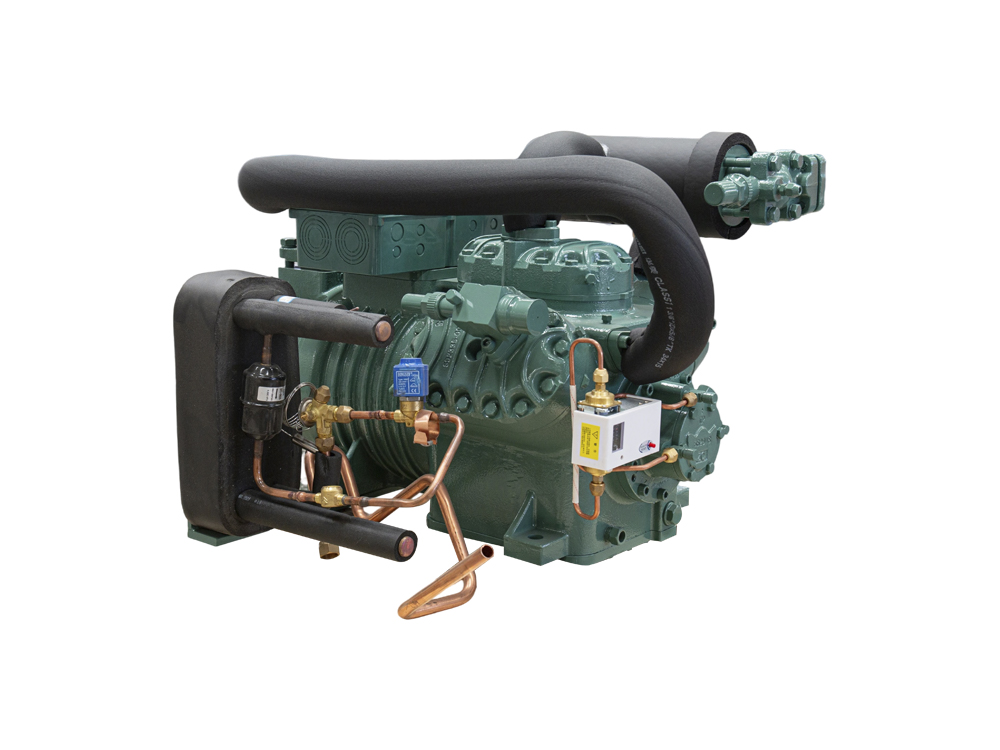
Condensing units are commonly grouped by how the compressor and its motor are housed. In an open packing condensing unit, the compressor is driven by an external motor connected through a shaft and coupling, so the motor can be inspected or replaced without opening the refrigerant circuit. In a hermetic unit, the motor and compressor share a sealed steel shell. Each approach has trade-offs that matter in real projects.
| Feature | Open packing design | Hermetic design |
|---|---|---|
| Motor access | Motor can be serviced externally | Sealed shell, service by replacement |
| Routine maintenance | Coupling, belts and motor checks are straightforward | Fewer external parts to inspect |
| Motor cooling | Motor runs outside the refrigerant flow | Motor cooled by suction gas |
| Leak risk points | Shaft seal needs periodic inspection | Fewer joints in the circuit |
| Typical use | Larger cold rooms and process cooling | Compact and smaller-capacity systems |
Open-type designs are often preferred where maintenance teams want direct access to motors and drives. They also suit installations where the compressor may operate in warm surroundings that would place extra stress on a motor enclosed inside a hermetic shell. The trade-off is that the shaft seal and coupling become parts that must be monitored, so a planned inspection schedule is essential.
When comparing options, ask who will service the unit and how quickly replacement parts can be sourced locally. These answers often matter more over ten years than a small difference in nameplate efficiency.
Air-Cooled Versus Water-Cooled Condensing Units
Choosing between air-cooled and water-cooled heat rejection depends mainly on site conditions, water availability, and the owner's priorities for installation and operating cost. The table below summarizes the most important differences.
| Factor | Air-cooled | Water-cooled |
|---|---|---|
| Heat rejection medium | Outdoor air | Water loop with cooling tower |
| Installation scope | Simple roof or yard mounting | Pumps, tower and piping required |
| Water consumption | None | Continuous makeup water |
| Condensing temperature | Follows ambient air | More stable, usually lower |
| Main maintenance tasks | Coil cleaning and fan checks | Water treatment and tower cleaning |
| Noise source | Fan noise near the unit | Tower and pump noise |
In hot and dry regions where water is expensive or restricted, air-cooled systems are often the practical choice. In locations with cool winters and very large continuous loads, water-cooled plants can offer better part-load efficiency. Air-cooled units also simplify the project because there is no cooling tower to design, permit, and maintain.
Where air cooling tends to be the better fit
- Sites with limited water supply or restrictions on wastewater discharge
- Small and medium cold rooms that must be installed quickly and with minimal civil work
- Projects with limited mechanical room space or no suitable location for a tower
- Locations where cool seasons allow the system to reject heat more easily for part of the year
Typical Applications in Cold Storage and Food Processing
Air-cooled condensing units appear wherever refrigerated space must hold a steady temperature with equipment that is practical to install and maintain. The most common applications fall into three groups.
Each application places different demands on the unit. Chilled rooms often run close to the boundary where excess dehumidification and frost become concerns, so the evaporator and condensing unit must be matched carefully. Frozen storage runs at lower suction temperatures, which reduces the density of the refrigerant vapor and lowers the capacity the compressor can deliver. Food processing areas add washdown cycles, higher product heat loads, and frequent door openings, all of which increase the load and widen its daily swing.
Case example from a meat processing facility
In one meat processing facility, an aging chilled storage system was replaced with an open-type air-cooled condensing unit sized for the peak summer load. The new installation allowed the maintenance team to inspect the motor and coupling without disturbing the refrigerant circuit. Shaft seal replacement was scheduled during a planned weekend shutdown rather than handled as an emergency repair. After the thermostat and pressure controls were retuned, short cycling of the compressor dropped noticeably, and room temperature held within a narrower band during hot afternoons.
Key Specifications to Check Before You Buy
Specification sheets can run to many pages, but a short list of parameters determines whether a unit will perform in your application. Compare these values with your load calculation and site data rather than relying on rated capacity alone. A refrigeration condensing unit that matches the nameplate but not the site conditions will underperform in service.
| Parameter | What to check | Why it matters |
|---|---|---|
| Rated power | Motor horsepower, such as 5 HP | Sets the capacity range and electrical design |
| Refrigerant | Compatibility with R404A, R507 or other refrigerants | Affects system charge, oil choice and regulations |
| Evaporating range | Target suction temperature for the room | Drives compressor selection and capacity |
| Design ambient | Highest outdoor temperature at the site | Controls condensing pressure and real output |
| Electrical supply | Voltage, phase and frequency | Must match site power and protection devices |
| Dimensions and weight | Footprint, height and lifting weight | Affects roof loading and installation access |
| Protection devices | High pressure, low pressure and overload settings | Protects the compressor from harmful operation |
Refrigerant choice deserves particular attention. Some older refrigerants are subject to phase-out restrictions in many regions, and service availability can vary widely. Before finalizing a design, confirm which refrigerants are permitted locally and whether future replacement is likely to be required.
A Step-by-Step Selection Process
The selection process works best when it follows the same order every time. Skipping a step usually leads to a unit that looks correct on paper but struggles during the first hot season. The flow below shows a practical sequence.
Figure 2: Four-stage selection sequence
- Calculate the total refrigeration load, including product heat, air infiltration, lighting, people, and defrost energy.
- Confirm the evaporating temperature and the design ambient temperature for the specific site.
- Choose the refrigerant, then check local regulations and the long-term availability of service supplies.
- Select the compressor size, verify the condensing capacity at design ambient, and confirm the electrical supply.
- Review maintenance access, noise limits, and spare parts before finalizing the purchase.
Many selection errors come from skipping the second step. A unit that matches the load under mild weather can fall short during a summer heat wave, which is precisely when product losses are most expensive.
Common sizing mistakes
- Using average outdoor temperatures instead of the design peak temperature for the location
- Ignoring planned expansion, such as additional racks or a larger product mix in the future
- Reducing condenser coil size to lower cost, which raises condensing pressure in hot months
- Forgetting that high altitude reduces air density and lowers the heat transfer capacity of the coil
Installation and Site Considerations
A well-selected unit can still underperform if it is installed poorly. Hot air recirculation is one of the most frequent causes of trouble. When discharge air loops back into the coil inlet, the effective ambient temperature rises, condensing pressure climbs, and the compressor runs longer than necessary.
Position the unit so that prevailing winds do not carry hot exhaust back into the intake, and keep the discharge path open to the sky or to a clear area.
- Leave the intake side clear so air can enter freely, following the clearances given in the installation guide
- Mount the unit on a level base with vibration isolators to protect piping and reduce structure-borne noise
- Avoid placing the unit beside walls or enclosures that trap heat and prevent airflow
- Protect the coil from direct sun where practical, but never block airflow with shade structures
- Provide access space for technicians, including room to remove the fan guard and service the motor
Piping and refrigerant charge
Refrigerant piping must be sized for the line velocity and pressure drop expected at full load. Oversized lines reduce velocity, which can cause oil return problems, while undersized lines increase pressure drop and reduce capacity. Charge the system according to the nameplate and confirm operation with pressure and temperature readings after commissioning. A charge that is too high floods the condenser and raises head pressure, while a charge that is too low starves the evaporator and shortens compressor life.
Maintenance Routine and Common Faults
A simple maintenance routine prevents most failures. Plan the schedule around the seasons, with extra attention before the hottest months, and record readings at each visit so that gradual changes can be spotted early.
| Task | Suggested frequency | Purpose |
|---|---|---|
| Clean condenser coil | Monthly on dusty sites | Maintains heat rejection |
| Check fan blades and motor | Monthly | Ensures airflow and balance |
| Inspect coupling and belts | Quarterly | Prevents misalignment and wear |
| Check oil level and leaks | Quarterly | Protects compressor lubrication |
| Record pressures and temperatures | Monthly | Detects early drift in performance |
| Test safety controls | Twice a year | Confirms protection devices respond |
Troubleshooting high condensing pressure
When condensing pressure rises above its normal band, technicians can usually isolate the cause by working through a short checklist in order:
- Check whether the coil is dirty, bent, or blocked by debris and vegetation.
- Confirm that the fan is running at the correct speed and turning in the right direction.
- Look for hot air recirculation caused by nearby walls, neighboring equipment, or enclosures.
- Verify that the refrigerant charge is not overfilled, since excess liquid floods the condenser.
Addressing these four points in sequence usually identifies the fault during a single service visit, which keeps downtime short and avoids unnecessary component replacement.
Energy Use and Operating Cost
Energy represents the largest share of lifetime cost for most condensing units, often exceeding the purchase price over several years of operation. A few design and control choices have an outsized effect on consumption.
A practical approach is to log operating data for several weeks and compare compressor run time with the measured cooling load. If the unit runs almost continuously during mild weather, the condensing setpoint or fan control strategy may need adjustment. Logging also reveals whether a unit is oversized, since oversized equipment tends to cycle frequently and wear faster.
Lowering condensing pressure reduces compressor work, but pushing it too low can starve the expansion valve and cause unstable operation. Good control logic balances both sides rather than chasing the lowest number.
Frequently Asked Questions
Q1: What is the main difference between an air-cooled condensing unit and a remote condenser?
An air-cooled condensing unit combines the compressor and condenser in one outdoor package, which simplifies installation and commissioning. A remote condenser separates the condenser from the compressor rack, which can help when the rack is housed indoors, but it requires more piping and careful design of the refrigerant lines.
Q2: How long does an air-cooled condensing unit typically last?
With regular maintenance, a well-selected unit commonly operates for many years. Service life depends heavily on the operating environment, the quality of installation, the frequency of cleaning, and whether the unit was sized correctly for its load.
Q3: Can an air-cooled condensing unit operate effectively in very hot climates?
Yes, provided that the design ambient temperature used for selection reflects the hottest conditions at the site. Units in hot climates should have adequate coil area, reliable fans, and clear airflow paths, and the installation should avoid heat recirculation from nearby surfaces.
Q4: Which refrigerants are commonly used with open packing condensing units?
Open-type units are available for several refrigerants used in commercial refrigeration, including R404A and R507 for medium and low temperature applications. Refrigerant selection should follow local regulations, the design of the evaporator, and the long-term availability of service supplies.
Q5: How often should the condenser coil be cleaned?
Cleaning frequency depends on the surrounding environment. Sites with dust, pollen, leaves, or airborne grease may require monthly cleaning, while cleaner locations may need it only a few times per year. Visual inspection during routine visits is the best guide.
Q6: What information should I prepare before asking a supplier to check a selection?
Prepare the total cooling load, the required evaporating temperature, the design ambient temperature for the site, the preferred refrigerant, the electrical supply details, and any constraints on installation space or noise. Providing these details allows the supplier to check the selection accurately and identify any specifications that need attention before installation begins.


 Contact Number:+86-18858565929
