

 English
 русский
 Español
Content
- 1 01What an Industrial Refrigeration Evaporator Does
- 2 02How It Works Through the Refrigeration Cycle
- 3 03Industrial Evaporators vs Traditional Cooling Components
- 4 04Performance Factors Worth Comparing
- 5 05Where Industrial Evaporators Are Used
- 6 06Choosing a Manufacturer You Can Rely On
- 7 Quick Answers for Buyers
Every industrial cooling system lives or dies by one component doing its job quietly in the background. An industrial refrigeration evaporator is that component — the point where refrigerant actually pulls heat out of the room, the product, or the process line. Get the specification wrong and every downstream cost, from energy bills to spoilage risk, goes up with it.
01What an Industrial Refrigeration Evaporator Does
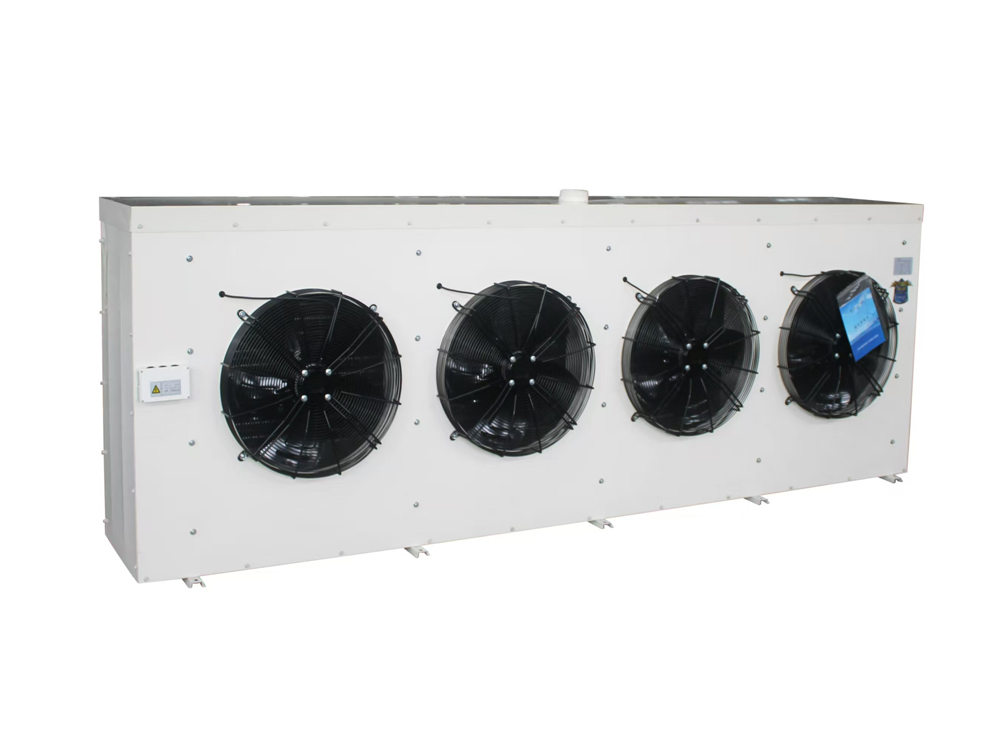
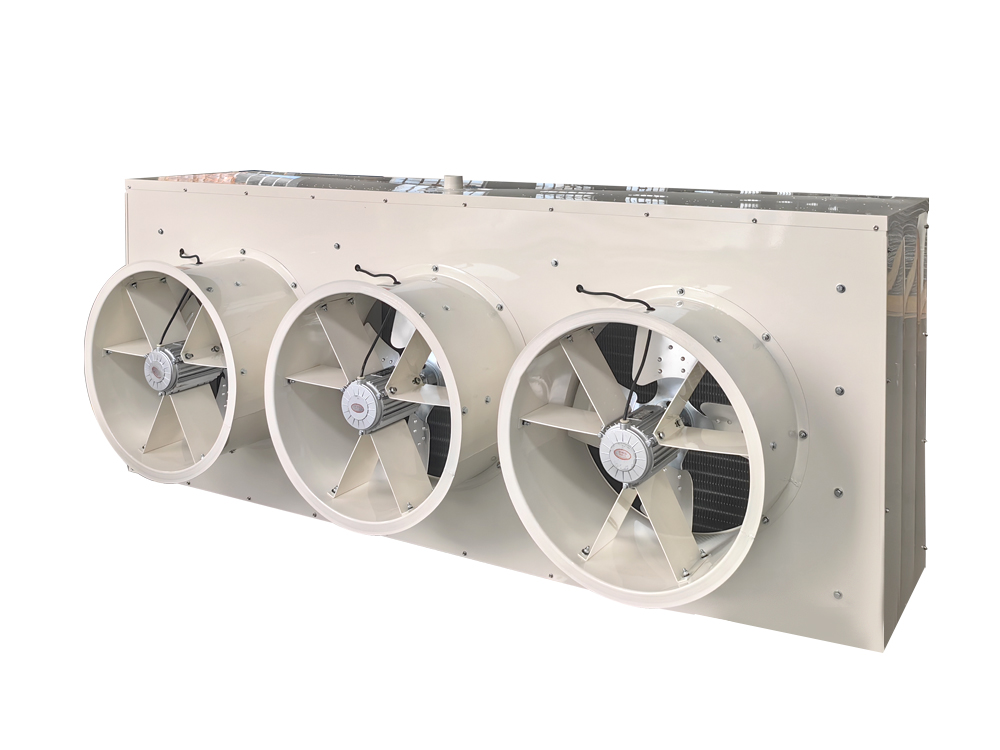
An industrial refrigeration evaporator is a heat exchanger that absorbs heat from a storage or process space as liquid refrigerant boils into vapor inside its coil, then sends that heat away for removal by the rest of the system.
Refrigerant enters the coil as a cold, low-pressure liquid. As it moves through the tubes it draws heat from the surrounding air, boiling into gas in the process. That gas returns to the compressor to start the next cycle, while the air circulating past the coil comes out noticeably colder. Common formats include air-cooling units, ceiling-mounted and floor-mounted models, plate evaporators, and shell-and-tube designs, each suited to a different combination of space and load.
02How It Works Through the Refrigeration Cycle
Refrigerant expansion
Pressure drops sharply as refrigerant passes through the expansion valve, priming it to absorb heat.
Heat absorption
The cold refrigerant enters the coil and draws heat from the air, products, or room around it.
Evaporation
The refrigerant changes from liquid to vapor as it absorbs that heat, giving the evaporator its name.
Heat removal
Vapor returns to the compressor, carrying the absorbed heat out of the space for the next cycle.
03Industrial Evaporators vs Traditional Cooling Components
Standard cooling components were rarely built for continuous industrial duty, and the performance gap shows up quickly at scale.
| Heat transfer | High-efficiency exchange design | Limited performance |
| Cooling capacity | Suited to large industrial loads | Mainly small-scale use |
| Durability | Built for continuous operation | Shorter service life |
| Temperature control | Precise and stable | More variation |
| Energy use | Optimized consumption | Higher losses |
04Performance Factors Worth Comparing
05Where Industrial Evaporators Are Used
The same core component gets tuned differently depending on what it is protecting.
06Choosing a Manufacturer You Can Rely On
Two evaporators can share nearly identical specifications on paper and still perform differently once installed. Before ordering, review the manufacturer's engineering support, custom design ability, quality certifications, and after-sales service record. A supplier experienced with industrial refrigeration evaporator design for your specific industry will size the coil, fan, and defrost method correctly the first time, which matters far more over the equipment's lifespan than the number on the initial quote.
Quick Answers for Buyers
What is the difference between an evaporator and a condenser?
The evaporator absorbs heat as refrigerant turns to vapor inside the cooled space, while the condenser releases that heat outside the space as the refrigerant turns back to liquid.
How do I size an evaporator for my facility?
Sizing depends on cooling capacity needed, room dimensions, product load, and target temperature range — a supplier's engineering team should confirm this against your specific conditions rather than a generic chart.
Which coil material lasts longest in cold storage?
Copper tubes with aluminum fins are the industry standard for balancing heat transfer efficiency with corrosion resistance in continuous cold storage use.
Does defrost method affect evaporator efficiency?
Yes. Frost buildup insulates the coil and reduces heat transfer, so the defrost method and its automation level directly affect how consistently the evaporator performs.


 Contact Number:+86-18858565929
