

 English
 русский
 Español
Content
- 1 Understanding Industrial Cold Room Coolers: Definition and Core Capabilities
- 2 How to Select the Right Industrial Cold Room Cooler for Your Application
- 3 Technical Specifications and Configuration Options
- 4 Application Scenarios and Industry-Specific Considerations
- 5 Key Factors Distinguishing Premium Industrial Cooler Solutions
- 6 Comparative Analysis: Key Selection Criteria Matrix
- 7 Installation Considerations and Operational Optimization
- 8 Energy Efficiency Metrics and Operational Cost Implications
- 9 Regulatory Compliance and Environmental Considerations
- 10 Common Operational Issues and Diagnostic Approaches
- 11 Procurement Best Practices and Request-for-Quotation Strategy
- 12 Frequently Asked Questions
- 12.0.1 Q1: What fin spacing should I specify for a -18°C cold storage facility?
- 12.0.2 Q2: Are industrial cold room coolers compatible with CO2 refrigerant systems?
- 12.0.3 Q3: What factors influence the choice between electric and hot-gas defrost systems?
- 12.0.4 Q4: How much energy can EC motors save compared to traditional AC motors?
- 12.0.5 Q5: What maintenance is absolutely essential for industrial cooler longevity?
- 12.0.6 Q6: Can I install a larger-capacity cooler than calculated to ensure adequate performance?
- 12.0.7 Q7: What are the primary differences between industrial coolers and residential air-conditioning systems?
- 12.0.8 Q8: How do I calculate thermal load to determine required cooler capacity?
- 12.0.9 Q9: What warranty and support options should I prioritize when selecting an industrial cooler?
- 12.0.10 Q10: Are there environmental or regulatory incentives available for upgrading to high-efficiency coolers?
Understanding Industrial Cold Room Coolers: Definition and Core Capabilities
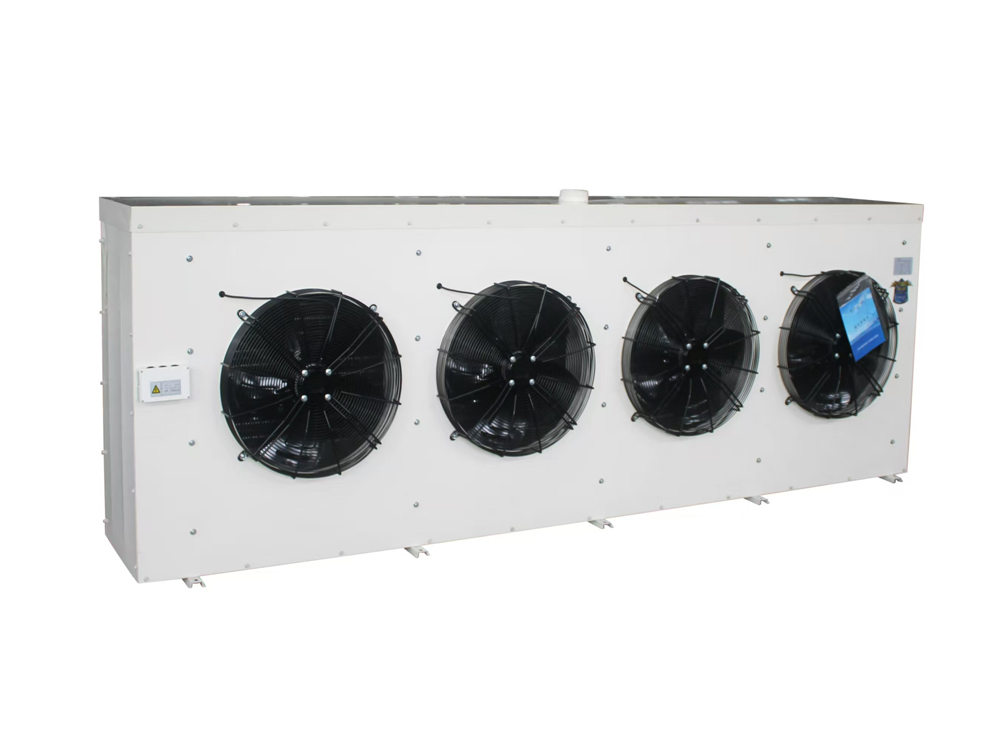
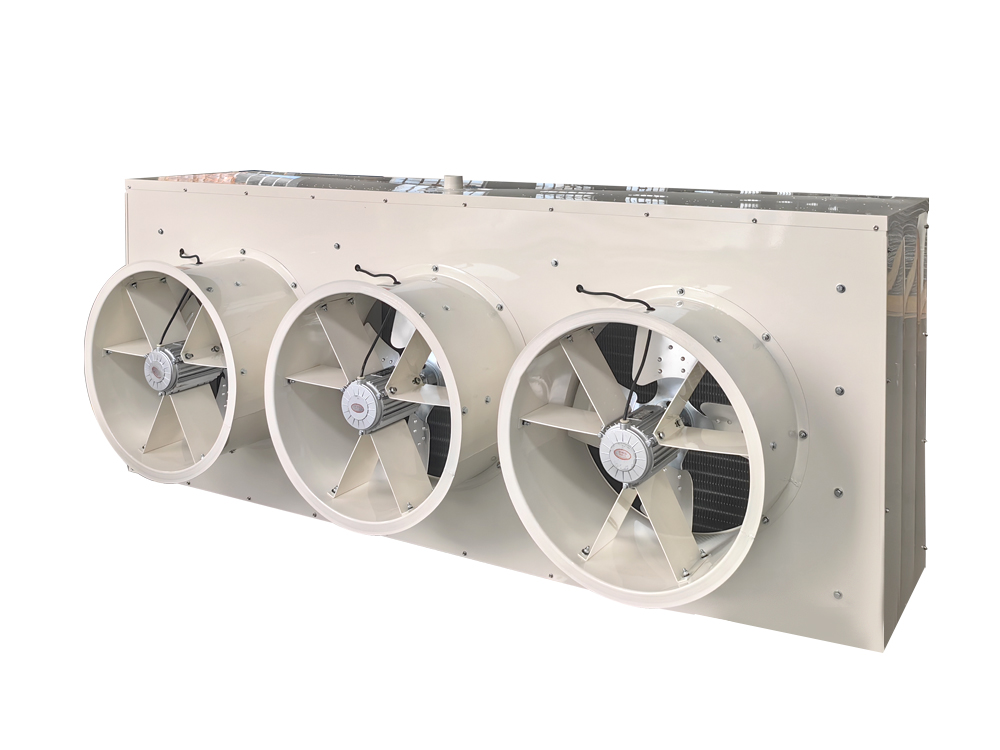
An industrial cold room cooler is a specialized heat exchange device designed to maintain precise temperature control in medium to large-scale cold storage facilities. These units operate across a broad temperature range from +10°C to -40°C, making them suitable for applications ranging from fresh-produce storage to ultra-low-temperature freezing environments.
Unlike portable cooling units, industrial-grade coolers integrate with existing refrigeration systems and operate continuously to sustain the thermal conditions necessary for product preservation, food safety compliance, and operational efficiency. Their robust construction, precision engineering, and adaptability to various refrigerants establish them as critical infrastructure in food processing, cold chain logistics, pharmaceutical storage, and chemical preservation industries.
The fundamental distinction lies in their capacity to handle significant air volumes, withstand corrosive or humid environments, and deliver consistent performance without thermal fluctuations that could compromise stored products or trigger costly downtime.
How to Select the Right Industrial Cold Room Cooler for Your Application
Match Fin Spacing to Your Room Temperature Requirements
Fin spacing represents one of the most critical parameters in cooler selection, yet it remains frequently misunderstood by facility managers unfamiliar with refrigeration engineering. The fin pitch (spacing between aluminum fins) directly impacts frost accumulation patterns, airflow efficiency, and defrost cycle frequency.
Temperature and Fin Spacing Correlation:
- Fresh-produce or chilled storage (around 0°C to +5°C): Requires 4.5mm fin spacing to balance cooling performance with moisture tolerance
- Standard cold-storage or refrigerated warehouses (-15°C to -18°C): Optimal fin spacing ranges from 5.5mm to 6mm, providing efficient heat transfer while managing frost buildup
- Blast-freezing or ultra-low-temperature vaults (below -25°C): Demands 9mm or wider fin spacing to prevent rapid frost accumulation that could restrict airflow and trigger premature equipment failure
Selecting incorrect fin spacing creates a cascade of operational problems. Narrow fins in low-temperature applications lead to increased defrost frequency, elevated energy consumption, and reduced effective cooling capacity. Conversely, oversized fin spacing in mild-temperature environments wastes capital investment and occupies unnecessary facility footprint.
Consider Refrigerant Compatibility and Environmental Regulations
Modern industrial coolers must accommodate multiple refrigerant types to align with evolving environmental legislation and facility-specific system design. Your equipment selection should verify compatibility across the following categories:
- Hydrofluoroolefin (HFO) and Hydrofluorocarbon (HFC) refrigerants: Traditional options offering established performance data and widespread system compatibility. Increasingly restricted in certain regulatory zones due to ozone-depletion potential
- Ammonia (NH3): Delivers superior thermodynamic efficiency and remains popular in large-scale industrial applications, though requiring specialized safety infrastructure and operator certification
- Carbon dioxide (CO2/R744): Low-toxicity, non-flammable, and aligned with European environmental standards. CO2 systems operate at higher pressures, necessitating specifically engineered cooler construction
- Brine and glycol solutions: Secondary cooling mediums used in cascading systems or facilities prioritizing indirect-contact cooling for enhanced safety
For facilities targeting North American or European markets, demonstrating CO2 refrigerant compatibility signals commitment to sustainability and forward-compatible infrastructure. This alignment with low-global-warming-potential (GWP) refrigerants increasingly influences procurement decisions among environmentally conscious operators.
Evaluate Defrost System Options for Your Operating Environment
Frost accumulation on cooler surfaces reduces thermal exchange efficiency and necessitates regular defrost cycles. Three primary defrost methodologies address different operational contexts:
| Defrost Method | Operating Principle | Ideal Application | Efficiency Consideration |
|---|---|---|---|
| Electric Defrost | Heating elements warm coil surfaces to melt accumulated frost | Moderate-humidity environments, systems without hot-gas recovery capability | Consumes auxiliary electrical energy; straightforward control logic |
| Hot-Gas Defrost | Compressed hot refrigerant diverts through cooler coils | Large-capacity systems, facilities with waste-heat recovery objectives | Maximizes thermodynamic cycle efficiency; requires sophisticated control valving |
| Water Defrost | Recirculated warm water sprayed across coil surfaces | High-humidity environments, food-processing facilities with existing water circulation | Minimal energy input; demands water-management infrastructure and drainage systems |
Selection logic extends beyond individual method characteristics. Consider your facility's existing infrastructure, ambient humidity patterns, and water availability. A facility with abundant waste-heat sources benefits from hot-gas defrost implementation. Conversely, facilities in humid climates near coastal regions may prioritize water defrost for controlled, localized frost removal.
Technical Specifications and Configuration Options
Cooling Capacity and Modular Design
Industrial coolers span a capacity range from 2kW to 250kW, accommodating everything from small auxiliary cold rooms to primary refrigeration for large-scale warehouses. This range enables facility planners to right-size equipment to their specific thermal load calculations rather than oversizing and incurring unnecessary capital expenditure and operational costs.
Modular construction allows multiple cooler units to operate in series or parallel configurations. Parallel installation increases redundancy and facilitates maintenance without shutting down the entire facility. Series configurations enhance cooling capacity in constrained spaces where a single large unit proves impractical.
Casing Materials and Corrosion Resistance
The cooler's external casing and internal structural components must withstand operational stresses while resisting environmental degradation. Material selection varies by application severity:
- Epoxy-coated carbon steel: Standard specification for most controlled-environment applications, balancing cost, durability, and appearance
- Pre-galvanized steel: Enhanced corrosion resistance for moderately humid or chemically active environments
- Stainless steel housings: Necessary for food-processing facilities, pharmaceutical operations, or installations in salt-air coastal environments where ferrous corrosion accelerates rapidly
- Aluminum-magnesium alloy fins: Specialized fin material for marine environments, offering superior salt-spray resistance compared to standard aluminum
Material investment directly correlates with facility longevity expectations and maintenance budgets. Stainless-steel coolers command 30-40% premium over carbon-steel equivalents, justified by extended service life in hostile environments and reduced maintenance frequency.
Fan Motor Technology: AC vs. EC Motors
Fan motors drive airflow through cooler coils and represent the primary mechanical component subject to wear and energy consumption. Two dominant motor technologies address different operational philosophies:
AC (Alternating Current) Motors: Traditional brushless induction motors operating at fixed speed regardless of cooling demand. Simpler control systems, lower initial cost, and proven long-term reliability characterize AC installations. However, constant operation at full speed consumes electrical power even during low-demand periods, inflating energy costs across facility uptime.
EC (Electronically Commutated) Motors: Advanced brushless direct-current motors with integrated electronic control capable of variable-speed operation. EC motors adjust fan speed to match instantaneous cooling demand, reducing energy consumption during partial-load conditions by up to 50-70% compared to AC counterparts. Enhanced precision in temperature control reduces temperature oscillation within storage chambers, improving product quality and shelf-life consistency.
For facilities pursuing operational cost reduction and environmental performance improvements, EC motor investment offers measurable return through energy savings, though initial capital expenditure exceeds AC alternatives by 15-25%.
Air Volume and Velocity Characteristics
Effective cooling depends not merely on thermal capacity but on uniform air distribution throughout the storage chamber. Air volume is measured in cubic meters per hour (m³/h) and varies with fin spacing, motor horsepower, and duct configuration. Improper air distribution creates temperature stratification, where certain zones fall outside acceptable ranges, compromising product preservation and generating operational conflicts between facility occupants.
Design consideration requires matching air velocity to application needs. High-velocity discharge favors large warehouses with open-plan layouts, achieving rapid temperature stabilization. Lower-velocity discharge suits smaller chambers or installations where noise constraints limit fan intensity, though requiring longer thermal stabilization periods.
Application Scenarios and Industry-Specific Considerations
Food Processing and Fresh-Produce Storage
Food-processing facilities demand coolers combining exceptional hygiene compliance with reliable performance in moisture-rich environments. Fresh-produce preservation operates at near-zero temperatures (0°C to +5°C) with moderate to high humidity levels.
Application-specific requirements include:
- Smooth, cleanable surfaces resistant to bacterial colonization and corrosion from cleaning solutions
- Condensate drainage systems preventing water pooling and biological growth
- Regular sanitation compatibility without equipment degradation
- Certification alignment with food-safety standards and regulatory compliance requirements
Agricultural and Horticultural Cold Storage
Produce storage demands precise humidity control alongside temperature management. Certain vegetables and fruits require elevated humidity levels (85-95% relative humidity) to minimize moisture loss and maintain appearance quality during extended storage.
Cooler specifications for agricultural applications emphasize:
- Fin materials and coatings withstanding high-humidity environments without accelerated degradation
- Airflow patterns optimized for gradual cooling to prevent thermal shock and cellular damage in sensitive produce
- Humidity-neutral defrost systems such as hot-gas or water defrost, avoiding electric defrost cycles that can trigger moisture fluctuations
Blast Freezing and High-Capacity Distribution Centers
Ultra-cold environments (-25°C and below) serve blast-freezing applications and large-capacity cold-chain distribution hubs. These installations prioritize rapid temperature descent and consistent maintenance of ultra-low conditions across expansive warehouse floor plans.
Technical demands include:
- Coolers with 9mm+ fin spacing minimizing frost-induced airflow restriction
- High-capacity units delivering 50-250kW continuous cooling output
- Robust defrost systems managing frequent frost cycles inherent to ultra-cold operation
- Redundancy infrastructure ensuring continuous operation despite maintenance or component failure
Pharmaceutical and Chemical Storage
Specialized storage for temperature-sensitive pharmaceuticals, biologics, and chemical compounds often requires tighter temperature control tolerances (±1°C or better) compared to food-storage applications. Cooler selection must accommodate control precision requirements and potential chemical compatibility concerns.
Facility-specific considerations encompass:
- Material compatibility with refrigerants and chemical vapors potentially present in storage chambers
- Control-system integration enabling automated temperature monitoring and alarm notification
- Compliance documentation and performance verification supporting regulatory audit requirements
Key Factors Distinguishing Premium Industrial Cooler Solutions
Integrated Selection and Design Support
Technical procurement complexity creates barriers for facility managers and project engineers unfamiliar with refrigeration thermodynamics. Premium suppliers bridge this knowledge gap through interactive selection software, performance calculators, and engineering consultation services. Access to these resources significantly reduces procurement cycle duration and eliminates costly specification errors.
Value-adding support services include:
- Web-based configurators enabling real-time capacity calculations based on facility dimensions and target temperatures
- Integration with facility CAD drawings for spatial verification and duct routing optimization
- Performance modeling comparing alternative specifications across energy consumption, noise output, and acquisition cost
- Direct communication with application engineers for complex or non-standard installations
Performance Verification and Certification
Independent performance testing through recognized standards bodies (such as Eurovent rating organizations) provides objective verification that manufacturer specifications align with real-world performance. Third-party validation instills confidence in procurement decisions and protects against undersized equipment leading to inadequate cooling capacity.
Relevant certifications and standards include:
- Eurovent Air Cooler Rating Certification documenting measured capacity, noise output, and power consumption
- ISO 13256 standards for refrigerant circuit design and safety
- CE marking confirming compliance with European machinery directives
- NSF or UL listings for food-contact applications
Installation Simplicity and Field Serviceability
Industrial installations typically occur within existing facility constraints, demanding flexible mounting options and minimal on-site engineering. Design features facilitating straightforward installation and maintenance reduce project timelines and labor costs:
- Hinged side panels enabling unrestricted access to internal components without complete cooler removal
- Quick-disconnect refrigerant and electrical connections minimizing disassembly during service procedures
- Forklift-compatible base structures or lifting lugs enabling equipment repositioning during facility reorganization
- Modular fan assemblies allowing motor replacement without complete cooler reconstruction
- Comprehensive service documentation and video tutorials supporting operator training and troubleshooting
Noise Control and Operational Comfort
Continuous operation within cold-storage facilities exposes workers to extended noise exposure. Sound-level management through vibration isolation, acoustic enclosures, or low-noise motor selections improves workplace conditions and supports regulatory compliance with occupational health standards.
Noise-reduction strategies include:
- Elastomeric vibration-isolation mounts decoupling equipment vibration from building structure
- Variable-speed EC motors operating at reduced rotation rates during partial-load conditions, naturally lowering acoustic output
- Flexible refrigerant and electrical connections preventing metal-to-metal contact and vibration transmission
Comparative Analysis: Key Selection Criteria Matrix
Systematic evaluation of candidate cooler specifications ensures objective alignment with facility requirements. The following framework enables side-by-side comparison of competing proposals:
Installation Considerations and Operational Optimization
Ductwork Integration and Airflow Distribution
Cooler effectiveness depends heavily on proper ductwork design and installation. Inadequate or improperly configured duct systems create temperature stratification, reduce effective capacity, and increase operational noise.
Critical installation practices include:
- Duct sizing ensuring air velocity remains within manufacturer recommendations (typically 3-5 m/s) to minimize pressure drop and noise generation
- Flexible connections between cooler discharge and rigid ductwork reducing vibration transmission and structural noise
- Strategic placement of supply air outlets and return-air pathways ensuring uniform temperature distribution throughout storage chamber
- Insulation of all ductwork external to the cold room preventing condensation and energy loss
Refrigerant Circuit Connection and Commissioning
Proper installation of refrigerant lines separates satisfactory cooler performance from failure. Common installation errors include:
- Inadequate refrigerant charge leading to reduced cooling capacity and compressor damage
- Excessive refrigerant charge causing liquid slugging and mechanical failure
- Oil accumulation in cooler coils reducing thermal efficiency and necessitating accelerated maintenance
- Moisture contamination promoting acid formation and component corrosion
Pre-operational commissioning procedures must include refrigerant charge verification, pressure-temperature measurements, and capacity testing against design specifications. Documentation of commissioning results establishes baseline performance data enabling early detection of future degradation.
Maintenance Scheduling and Lifecycle Management
Systematic maintenance extends cooler lifespan and preserves thermal performance. Recommended maintenance intervals include:
- Weekly: Visual inspection for ice or frost accumulation indicating defrost system malfunction
- Monthly: Fin cleanliness verification and gentle cleaning if necessary; electrical connection inspection
- Quarterly: Defrost system functional testing; refrigerant charge verification if equipped with gauges
- Semi-annual: Comprehensive system evaluation by qualified technician; performance testing against design specifications
- Annual: Full system inspection including refrigerant purity testing and oil analysis
Neglected maintenance accelerates component degradation, reduces cooling capacity by 15-30 percent, and significantly elevates energy consumption. Preventive maintenance investment yields measurable return through extended equipment lifespan and reduced emergency repair expenses.
Energy Efficiency Metrics and Operational Cost Implications
Operating costs for industrial coolers frequently exceed acquisition costs over a ten-year facility lifespan. Energy consumption represents 60-75 percent of total ownership cost, making efficiency optimization a critical procurement consideration.
Power Consumption Drivers and Reduction Strategies
Cooler energy consumption scales with several factors including fin surface area, motor horsepower, ambient temperature differential, and air-side pressure drop. Operational strategies reducing consumption include:
- Variable-speed motor operation: EC motors reduce speed during low-demand periods, cutting energy consumption by 50-70 percent compared to fixed-speed AC motors
- Thermostatic expansion valve tuning: Proper refrigerant metering prevents excessive evaporator flooding, improving energy transfer efficiency
- Condenser fouling prevention: Regular condenser cleaning maintains condensation efficiency and reduces compressor discharge pressure
- Demand-responsive defrost: Advanced controls initiate defrost only when necessary rather than on fixed time intervals, eliminating unnecessary thermal losses
Economic Analysis: Capital vs. Operating Cost Tradeoffs
Premium cooler specifications command higher acquisition costs but often deliver superior operating-cost performance justifying the initial investment. A representative economic comparison illustrates this principle:
Standard AC Motor Cooler: Acquisition cost 100 percent baseline; Annual electrical consumption 150,000 kWh at regional electricity rates (approximately USD 18,000-22,000 annually depending on geography).
Premium EC Motor Cooler: Acquisition cost 120 percent of baseline (20 percent premium); Annual electrical consumption 75,000 kWh through variable-speed operation (approximately USD 9,000-11,000 annually). Five-year net savings: USD 45,000-65,000 despite higher initial capital expenditure.
Economic evaluation demands facility-specific electricity rates, facility operational hours, and anticipated equipment lifespan. Facilities operating continuous or near-continuous schedules in high-electricity-cost regions achieve faster payback on efficiency investments compared to seasonal or intermittent operators in low-cost-electricity regions.
Regulatory Compliance and Environmental Considerations
Refrigerant Legislation and Future-Proofing Strategies
Global refrigerant regulations increasingly restrict high-global-warming-potential (GWP) substances. Phase-down timelines create risk for facility owners specifying legacy refrigerants facing accelerating costs and eventual unavailability.
Regulatory landscape considerations include:
- European Union F-Gas Regulation: Mandates phase-down of HFC refrigerants with aggressive restrictions on HFC-404A and related compounds
- Kigali Amendment Implementation: International protocol requiring HFC phase-down across most countries by mid-2030s
- Regional Incentive Programs: Many jurisdictions offer tax credits or grants for facilities transitioning to low-GWP refrigerants including CO2, HFO, or ammonia alternatives
Specifying coolers compatible with low-GWP refrigerants future-proofs capital investments and enables participation in incentive programs offsetting conversion costs.
Occupational Safety and Noise Compliance
Industrial facilities typically operate under occupational safety regulations limiting permissible noise exposure. Continuous operation of loud cooling equipment creates compliance challenges and worker discomfort.
Noise-mitigation technologies include:
- Acoustic enclosures around fan discharge points reducing sound propagation by 5-15 decibels
- Variable-speed motor operation lowering acoustic output during partial-load conditions
- Vibration-isolation mounts decoupling equipment vibration from building structure
- Low-noise impeller designs reducing turbulent airflow and aerodynamic noise generation
Food Safety Certifications and Hygiene Standards
Food-processing and cold-storage facilities must comply with food-safety regulations including HACCP (Hazard Analysis and Critical Control Points) requirements. Cooler selection must address hygiene and contamination-prevention considerations.
Food-safety relevant specifications include:
- NSF or UL certification confirming equipment suitability for food-contact environments
- Smooth, cleanable surfaces without crevices harboring bacterial colonization
- Drain systems and condensate management preventing water pooling
- Documentation of sanitation compatibility and approved cleaning procedures
Common Operational Issues and Diagnostic Approaches
Reduced Cooling Capacity Diagnosis
Performance degradation develops gradually through multiple mechanisms. Systematic troubleshooting isolates root causes:
- Compressor discharge pressure exceeds normal range: Indicates condenser fouling or condenser fan malfunction. Clean condenser coils and verify condenser fan operation
- Suction pressure lower than design specification: Suggests inadequate refrigerant charge, expansion valve underfeeding, or excessive evaporator frost accumulation. Verify charge quantity and defrost system functionality
- Temperature difference between coil inlet and outlet below design value: Indicates reduced airflow through cooler. Check for fin blockage, verify fan motor operation at design speed, and confirm ductwork obstruction absence
- Frequent defrost cycle initiation: Reflects rapid frost accumulation, typically resulting from inadequate airflow, excessive moisture ingress, or undersized cooler capacity
Excessive Noise Generation
Operational noise complaints often indicate developing mechanical issues. Diagnostic assessment includes:
- High-pitched fan noise: Suggests fan blade contact with shroud or internal components. Inspect fan assembly for debris or mechanical damage
- Vibration transmission to building structure: Indicates isolation mount degradation or internal component looseness. Verify vibration-isolation mount condition and tighten all fasteners
- Compressor discharge line noise: Reflects liquid slugging in compressor discharge. Verify refrigerant charge and oil level in system
- Intermittent banging or knocking: Suggests water-hammer effect in condensate drains or refrigerant line vibration. Inspect drain systems and verify refrigerant line support adequacy
Procurement Best Practices and Request-for-Quotation Strategy
Specification Documentation Essentials
Clear, comprehensive specifications accelerate procurement and reduce miscommunication with potential suppliers. Essential documentation components include:
- Facility dimensions and insulation R-value enabling accurate thermal load calculation
- Target temperature setpoint and allowable operating range
- Anticipated humidity range and environmental corrosiveness assessment
- Existing refrigeration system type and refrigerant specification
- Defrost method preferences aligned with facility capabilities
- Electrical power availability and preferred motor type (AC vs. EC)
- Installation space constraints and access limitations
- Maintenance resource availability and preferred support model (in-house vs. supplier service)
Supplier Evaluation Criteria
Vendor assessment extends beyond price comparison. Relevant evaluation dimensions include:
- Technical Support Availability: Assess responsiveness to technical inquiries and engineer availability for complex specifications
- Performance Documentation: Request third-party certification reports and reference facilities operating comparable equipment
- Warranty and Support Terms: Compare warranty duration, coverage scope, and responsiveness to support requests
- Spare Parts Availability: Verify long-term parts availability for critical components including motors and refrigerant controls
- Installation Expertise: Assess installer training, on-site support availability, and commissioning verification procedures
- Financial Stability: Evaluate supplier longevity and financial capability ensuring continued support throughout equipment lifespan
Price Negotiation and Total Cost Analysis
Equipment acquisition cost represents only a portion of total ownership cost. Comprehensive economic evaluation must incorporate:
- Acquisition price and payment terms flexibility
- Installation and commissioning costs including labor and travel expenses
- Projected energy consumption costs over facility lifespan
- Maintenance and service costs including labor rates and spare parts pricing
- Anticipated replacement timeline and residual value assessment
- Opportunity costs associated with equipment downtime and production disruption
Life-cycle cost analysis incorporating these factors typically reveals that lowest-acquisition-price options often deliver unfavorable total-cost outcomes compared to mid-range specifications balancing performance, efficiency, and reliability.
Frequently Asked Questions
Q1: What fin spacing should I specify for a -18°C cold storage facility?
Standard cold-storage applications at -18°C typically require fin spacing between 5.5mm and 6mm. This spacing balances cooling performance with manageable frost accumulation rates. Consult with your refrigeration engineer to verify this specification against your specific facility's humidity conditions and defrost system capabilities. Narrower spacing may provide marginal cooling improvement but increases defrost frequency and operating costs. Wider spacing reduces cooling efficiency.
Q2: Are industrial cold room coolers compatible with CO2 refrigerant systems?
Yes, modern industrial coolers are increasingly designed for CO2 compatibility. However, not all coolers accommodate CO2. Confirm this capability explicitly when soliciting quotations, as CO2 systems operate at higher pressures requiring specialized cooler construction. CO2-compatible units feature reinforced tubing, specialized connection fittings, and pressure-rated components. The premium for CO2 compatibility typically ranges from 10-20 percent but aligns with environmental regulations and future-proofing requirements.
Q3: What factors influence the choice between electric and hot-gas defrost systems?
Electric defrost offers simplicity and lower initial cost, making it suitable for moderate-humidity environments with moderate frost accumulation. Hot-gas defrost utilizes waste heat from the refrigeration cycle, reducing auxiliary energy consumption and making it economically attractive for high-capacity systems operating continuously. Water defrost works well in facilities with abundant warm water and high humidity environments. Your defrost system selection should align with facility humidity patterns, existing infrastructure, and energy management priorities.
Q4: How much energy can EC motors save compared to traditional AC motors?
EC motors typically reduce energy consumption by 50-70 percent compared to fixed-speed AC motors when operating under partial-load conditions, which characterize many cold-storage applications. The magnitude of savings depends on your specific temperature control strategy, facility insulation quality, and ambient temperature variations. For continuous or near-continuous operation in cold climates, savings may approach the upper range. Moderate or seasonal operation yields more modest savings. Calculate facility-specific payback periods incorporating local electricity rates and anticipated operational hours.
Q5: What maintenance is absolutely essential for industrial cooler longevity?
Minimum essential maintenance includes weekly visual inspections for abnormal frost accumulation or operational irregularities, monthly cleanliness verification of cooler fins, and quarterly functional testing of defrost systems. Beyond this baseline, engage a qualified refrigeration technician for semi-annual comprehensive system evaluation including refrigerant charge verification and performance comparison against design specifications. Many facilities develop cooperative relationships with service providers for preventive maintenance reducing emergency callout frequency and associated costs.
Q6: Can I install a larger-capacity cooler than calculated to ensure adequate performance?
Over-capacity installation typically creates operational inefficiencies and should be avoided. Oversized coolers cycle on and off frequently ("short cycling"), reducing thermal efficiency and increasing compressor wear. This cyclic operation also impairs temperature control precision, creating oscillations that can compromise product quality. Provide reasonable capacity margin (15-20 percent above calculated thermal load) but avoid excess oversizing. Modular designs enabling future expansion offer better long-term flexibility than single oversized units.
Q7: What are the primary differences between industrial coolers and residential air-conditioning systems?
Industrial coolers operate continuously in thermally demanding environments (large temperature differentials between cooled and ambient spaces), utilize heavy-duty component construction, accommodate multiple refrigerant types, and integrate with large-capacity commercial refrigeration systems. Residential air conditioning operates intermittently in modest-temperature-differential environments and prioritizes cost minimization. Industrial coolers emphasize reliability, capacity, and long-term efficiency over upfront cost considerations.
Q8: How do I calculate thermal load to determine required cooler capacity?
Thermal load calculation encompasses heat transfer through building envelope (walls, ceiling, floor), infiltration of outside air, internal heat generation from lights and equipment, and product temperature reduction requirements. This calculation requires facility dimensions, insulation R-values, anticipated ambient temperature, and specific operational parameters. Most equipment suppliers provide selection software or engage engineers to perform this analysis during the quotation stage. Avoid oversimplified per-volume estimates; engage qualified professionals for accurate capacity determination.
Q9: What warranty and support options should I prioritize when selecting an industrial cooler?
Prioritize suppliers offering multi-year warranty on core components (particularly compressor and motor), responsive technical support with guaranteed response timeframes, documented spare-parts availability, and trained installation/service networks in your geographic region. Some suppliers offer extended service contracts covering routine maintenance and prioritized emergency support. Evaluate these offerings during procurement stages. Long-term supplier relationships often provide better value than lowest-price providers lacking local support infrastructure.
Q10: Are there environmental or regulatory incentives available for upgrading to high-efficiency coolers?
Many regional jurisdictions offer tax credits, rebates, or grant programs supporting transition to high-efficiency refrigeration equipment or low-GWP refrigerant systems. Research your local energy-efficiency programs, environmental agency initiatives, and industry-specific incentives. In some cases, program eligibility requires third-party energy audits or efficiency verification. Engage with your equipment supplier to identify available incentives and ensure your specifications qualify before procurement.


 Contact Number:+86-18858565929
