

 English
 русский
 Español
Content
- 1 Understanding the Core Difference Between Dry and Wet Cooling
- 2 How Each Cooling Method Actually Works
- 3 Side by Side Performance Comparison
- 4 Efficiency Considerations for an Industrial Condenser
- 5 Matching Cooling Type to Condenser Application
- 6 Common Condenser Types Used With Each Cooling Method
- 7 Decision Framework for Facility Planners
- 8 When Custom or Remote Condenser Designs Make Sense
- 9 Frequently Asked Questions
- 9.0.1 Q1: Is dry cooling always less efficient than wet cooling?
- 9.0.2 Q2: Does wet cooling require more maintenance than dry cooling?
- 9.0.3 Q3: Can a facility switch between dry and wet cooling seasonally?
- 9.0.4 Q4: What condenser material is best for coastal or corrosive environments?
- 9.0.5 Q5: How does climate affect the choice between air cooled and evaporative condensers?
Understanding the Core Difference Between Dry and Wet Cooling
Every dry cooling system rejects heat directly to ambient air across finned surfaces, while wet cooling relies on evaporation to pull heat away from process fluids. This distinction shapes everything downstream, from water consumption to seasonal performance swings in any condenser installation.
Facility engineers choosing between these two approaches are really weighing a set of operational trade offs. Dry systems avoid water treatment and blowdown concerns. Wet systems typically achieve tighter approach temperatures and can handle higher heat loads in a smaller footprint.
How Each Cooling Method Actually Works
Dry Cooling Mechanism
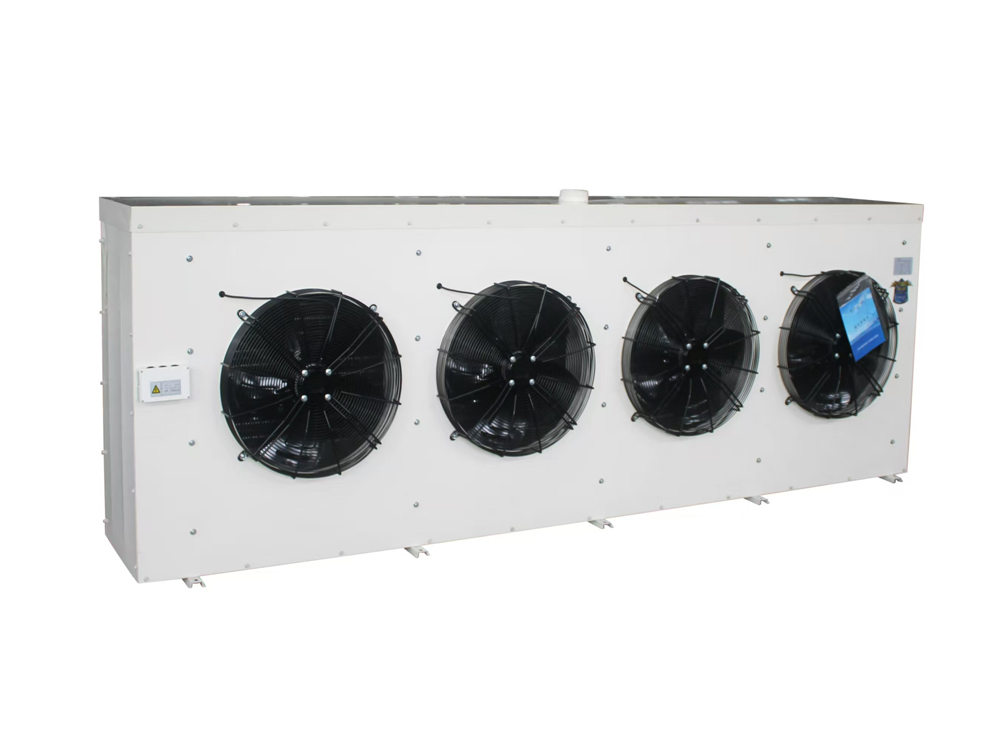
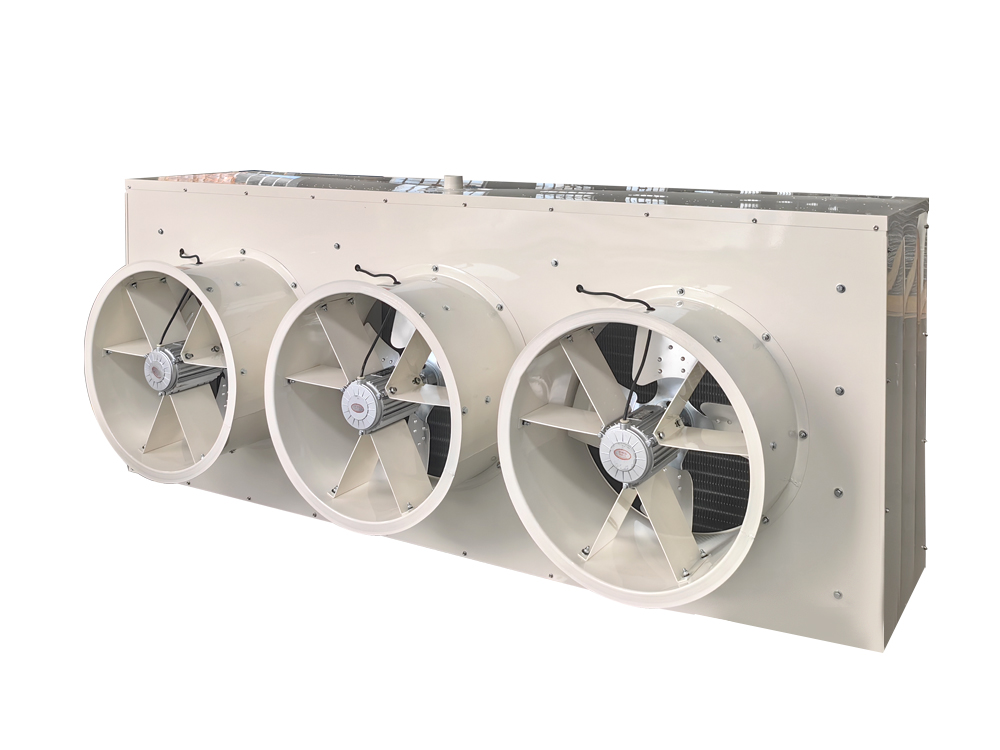
Dry cooling pushes ambient air across finned tube bundles using fans, transferring heat purely through sensible cooling. No water contacts the airstream, so performance depends heavily on dry bulb temperature.
Wet Cooling Mechanism
Wet cooling introduces water spray or a wetted media into the airstream. As water evaporates, it absorbs latent heat, which is why performance tracks wet bulb temperature rather than dry bulb temperature. This typically allows for lower condensing temperatures in humid or moderate climates.
Side by Side Performance Comparison
| Factor | Dry Cooling | Wet Cooling |
|---|---|---|
| Water Consumption | Minimal to none | Continuous makeup water required |
| Approach Temperature | Higher, tied to dry bulb | Lower, tied to wet bulb |
| Footprint per Ton of Cooling | Larger | Smaller |
| Water Treatment Needs | None | Ongoing chemical treatment |
| Freeze Risk in Cold Climates | Low | Moderate to high |
| Typical Maintenance Load | Lower | Higher |
Efficiency Considerations for an Industrial Condenser
An industrial condenser operating in a hot, dry climate may see dry cooling penalized by high ambient temperatures, pushing condensing pressures upward and reducing compressor efficiency. In humid coastal regions, wet cooling often retains an advantage because the wet bulb depression stays favorable year round.
- Dry systems generally trade a few percentage points of thermodynamic efficiency for zero water dependency
- Wet systems can lower condensing temperature by a meaningful margin in favorable climates, easing compressor load
- Hybrid configurations combine both methods, switching modes seasonally to balance water use and efficiency
Matching Cooling Type to Condenser Application
Refrigeration Condenser Applications
A refrigeration condenser serving cold storage or food processing often benefits from evaporative or wet designs because tighter approach temperatures reduce compressor energy draw across long duty cycles.
HVAC Condenser Applications
For comfort cooling, an HVAC condenser frequently uses air cooled dry designs on rooftops where water access is limited and maintenance simplicity matters more than marginal efficiency gains.
Heat Exchanger Condenser in Process Industries
A heat exchanger condenser in chemical or power generation settings may be shell and tube or microchannel in construction, selected based on fluid compatibility, pressure rating, and available cooling medium.
Common Condenser Types Used With Each Cooling Method
| Condenser Type | Cooling Method | Typical Setting |
|---|---|---|
| Air cooled condenser | Dry | Rooftop HVAC, remote refrigeration |
| Water cooled condenser | Wet | Central plant chillers |
| Evaporative condenser | Wet | Industrial refrigeration, cold storage |
| Shell and tube condenser | Wet or dry loop | Process industries |
| Microchannel condenser | Dry | Compact commercial units |
| Finned tube condenser | Dry | General HVAC and refrigeration |
Material selection also matters. A copper tube condenser offers strong thermal conductivity for demanding loads, while a stainless steel condenser suits corrosive or coastal environments where longevity is a priority.
Selecting a cooling method is rarely about which one performs better in isolation. It is about matching water availability, climate, and load profile to the condenser design that keeps total operating cost lowest over its service life.
Decision Framework for Facility Planners
- Assess local water availability and any regulatory restrictions on water discharge or usage
- Review regional climate data, comparing average dry bulb and wet bulb temperatures across seasons
- Estimate footprint constraints, since dry systems typically need more surface area for equivalent capacity
- Factor in maintenance staffing, since wet systems require water treatment monitoring and periodic cleaning
- Consider a high efficiency condenser configuration or hybrid dry and wet operation if both water conservation and peak performance are priorities
When Custom or Remote Condenser Designs Make Sense
Standard modular units do not always fit irregular equipment rooms or unusual load profiles. A custom condenser or compact condenser layout can be engineered around tight mechanical spaces, while a remote condenser setup separates the heat rejection unit from the compressor package, useful when rooftop or outdoor placement is the only viable option. A commercial refrigeration condenser serving multiple zones may also require staged fan control to match variable load conditions throughout the day.
Frequently Asked Questions
Q1: Is dry cooling always less efficient than wet cooling?
Not universally. Dry cooling loses relative efficiency in hot, dry climates but performs adequately in cooler regions where ambient temperatures stay moderate throughout the year.
Q2: Does wet cooling require more maintenance than dry cooling?
Generally yes. Wet systems need regular water treatment, scale control, and periodic cleaning of wetted surfaces, while dry systems mainly require fan and coil upkeep.
Q3: Can a facility switch between dry and wet cooling seasonally?
Yes, hybrid condenser systems are designed to operate dry during cooler months and switch to evaporative assistance during peak summer loads to balance water use and efficiency.
Q4: What condenser material is best for coastal or corrosive environments?
Stainless steel construction tends to hold up better against salt air and humidity compared to standard coated finishes, extending service life in coastal installations.
Q5: How does climate affect the choice between air cooled and evaporative condensers?
Humid climates favor evaporative designs since wet bulb depression stays favorable, while arid or water restricted regions often favor air cooled dry designs despite the efficiency trade off.


 Contact Number:+86-18858565929
